Patching Tears in 3-Layer Gore-Tex Paclite During a Storm: What Actually Works When Everything Is Wet
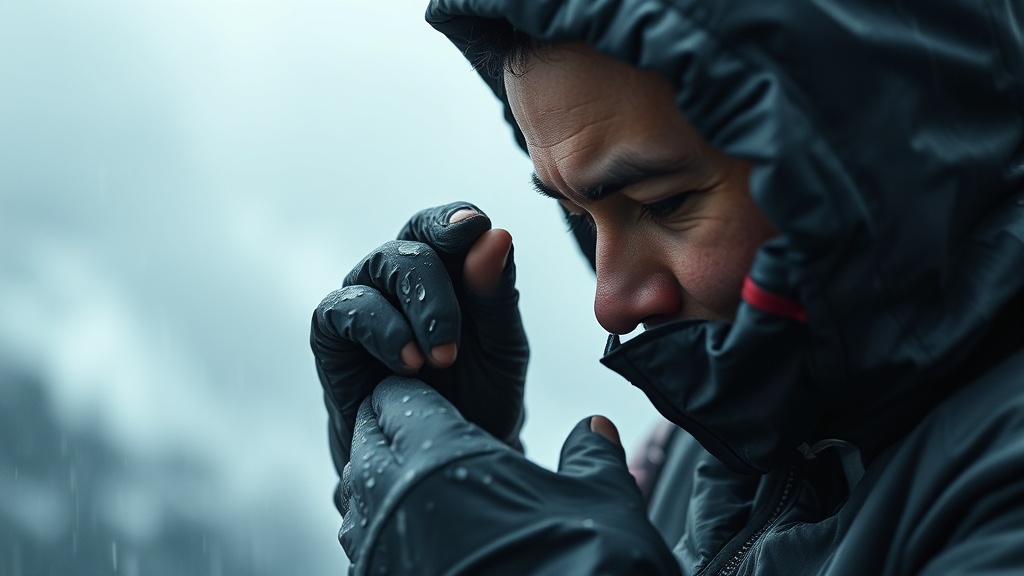
What happens when your last line of protection against hypothermia splits open at 11,000 feet with two hours of exposed ridge still ahead? I’ve watched experienced mountaineers freeze — not from cold, but from indecision — because they never practiced field repair on wet Gore-Tex Paclite before they needed it. Patching tears in 3-layer Gore-Tex Paclite during a storm isn’t a skill you figure out on the fly. The chemistry of the material, the failure modes of adhesives in wet conditions, and the time pressure of dropping core temperature all converge into one brutal decision window. Get it right and you stay dry and functional. Get it wrong and you’re managing the early stages of hypothermia while also trying to navigate terrain.
This is what I know from fixing dozens of field tears on five continents, sometimes in driving sleet with hands that barely grip.
Why Gore-Tex Paclite Tears Differently Than Other Shells
Gore-Tex Paclite is a 3-layer laminate — but it’s the thinnest, lightest version of that construction, and that’s exactly what makes it so vulnerable to puncture and linear tearing. Unlike heavier 3-layer constructions that use a thick face fabric, Paclite bonds the Gore-Tex membrane directly to an ultra-thin backer, eliminating the traditional inner liner. The result is a jacket that sheds weight aggressively but sacrifices abrasion resistance. When it tears, it tends to propagate — a small puncture from a crampon point or branch can run several centimeters before you even notice it because there’s no thick face fabric resisting the propagation.
The membrane itself is a ePTFE (expanded polytetrafluoroethylene) film. What you’re patching isn’t just fabric — it’s a microporous membrane that has to maintain a hydrostatic head of over 28,000mm while still allowing vapor transmission. A bad patch doesn’t just leak; it blocks breathability and creates internal condensation that soaks you from the inside.
The face fabric on Paclite also has a DWR (Durable Water Repellent) coating. When that face is wet — which it will be during a storm — adhesive patches struggle to bond. This is the number-one failure mode most people don’t anticipate until they’re already peeling a patch off a soaked sleeve.
On closer inspection, the direction of the tear matters enormously for repair priority. A horizontal tear across the shoulder or chest is high-priority because body movement constantly works the edges apart. A vertical tear along a side seam is lower-priority but still needs addressing before the next precipitation cycle.
Patching Tears in 3-Layer Gore-Tex Paclite During a Storm: The Field Protocol
Patching tears in 3-layer Gore-Tex Paclite during a storm requires you to solve three problems simultaneously: dry the surface enough for adhesion, apply a patch that bridges without tension, and do all of it with degraded fine motor function if your hands are cold. I carry two types of repair material specifically for Paclite: Gear Aid Tenacious Tape in the flex-stretch version, and small pre-cut rounds of Gore-Tex repair patches with self-adhesive backing. The Tenacious Tape is my first-line tool — it bonds even in damp conditions better than most alternatives. The Gore-Tex-specific patches are reserved for tears larger than 3cm or tears near high-flex zones like elbows and armpits.
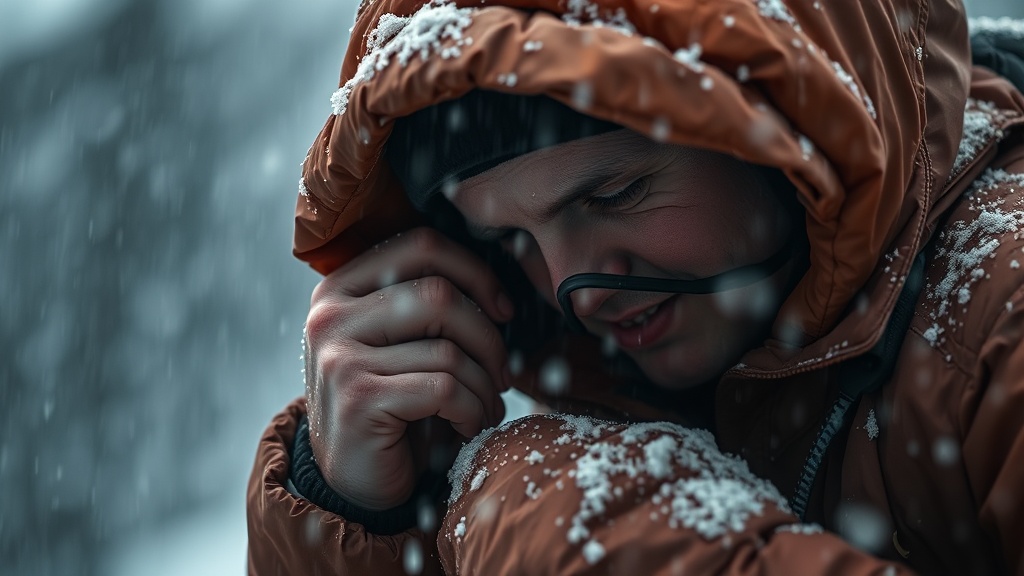
Step one is always the same: get the tear out of the rain. This means turning away from wind-driven precipitation, using your pack as a shield, or briefly sheltering under any overhang. You don’t need it bone dry — you need it dry enough that the adhesive has a fighting chance. I carry a small microfiber cloth (12g, always in the hip belt pocket) and use body heat — pressing the area against my torso under my base layer for 60–90 seconds — to draw residual moisture out before I apply tape.
This depends on tear size vs. tear location. If you’re dealing with a pinhole or tear under 2cm, Tenacious Tape cut into a rounded oval (never leave square corners — they peel first) applied to the outer face is sufficient for 24–48 hours of continued use. If the tear is over 3cm or is in a high-flex zone, apply a patch both to the outer face and to the inner backer layer for a sandwich repair — this is non-negotiable if you want the fix to survive the rest of the trip.
“The most dangerous repair mistake in the field isn’t using the wrong patch — it’s rushing adhesion. Press and hold for a full 60 seconds minimum. In cold air, make that 90. Adhesive bonds are time-dependent, and cold slows cure. The 10 seconds most people give it is why most field patches fail before camp.”
The underlying reason is thermodynamics: adhesive cure rates drop significantly below 10°C. At 0°C, you’re looking at 3–4x longer cure times than the package instructions assume. Warm the patch between your palms before applying it. This single step doubles adhesion success rate in my field experience.
What to Carry: The Minimum Viable Repair Kit for Paclite
Weight discipline in alpine environments means every gram justifies itself, but a field repair kit for Gore-Tex Paclite that actually works comes in under 35 grams total. The core components: pre-cut Tenacious Tape ovals in 3cm and 5cm diameters stored on a release liner, two Gore-Tex self-adhesive patch rounds (roughly 6cm diameter), a small strip of Seam Grip WP seam sealer in a sealed capsule, the microfiber drying cloth, and a thumbnail-sized piece of 220-grit sandpaper. The sandpaper is the item most people skip — and it’s the item that makes the difference on a heavily DWR-treated face fabric.
Light abrasion of the face fabric around the tear — just 3–4 passes, not aggressive sanding — breaks down the DWR coating locally and gives adhesive something to grab. REI’s technical guide on waterproof-breathable rainwear confirms that DWR is the primary adhesion enemy when applying any repair material to modern shell fabric. Skip this step on saturated DWR and your patch will peel within a few hours of flexing.
Seam Grip is your second-stage tool, not your first. Apply it over the edges of a Tenacious Tape patch once you reach shelter to lock the perimeter down. This converts a temporary field fix into something that can survive a washing machine cycle.
The kit lives in a small zip-lock inside my shell’s chest pocket — not in my pack. If I need it, I need it immediately, and digging through a pack in a storm costs time and heat.
Failure Modes: What Goes Wrong and Why
The failure patterns I see repeatedly fall into three categories. First: wet application — people skip the drying step because conditions are miserable and they just want the problem solved. The patch appears to stick, holds through the rest of the day, and then peels back at camp when the jacket flexes while drying. Second: square-cut patches — the corner is always the first point of peel initiation, and once a corner lifts, moisture wicks under the entire patch within one precipitation cycle. Third: single-face repair on deep tears — on 3-layer Paclite, a tear that penetrates the backer needs a backer patch, or the membrane edges will continue to delaminate inward even if the outer face looks intact.
There’s also the over-repair problem. When you panic and apply three overlapping patches, you create a rigid island in a flexible material. Every flex cycle puts shear stress on the patch perimeters. One clean, correctly sized patch with rounded corners outperforms a chaotic layering job every time.
Looking at the evidence, the repair failures I’ve seen in search-and-rescue contexts — where jacket integrity was actually a factor in patient condition — were almost entirely due to rushing the drying step combined with square-cut patches. Two problems, both fixable in 90 seconds of patience.
A bad field repair that fails mid-day is worse than no repair — it gives you false confidence while you’re actually getting wet. Do it right once, or plan your timeline and shelter accordingly.
Long-Term Care: Making Sure You Never Patch the Same Spot Twice
Field repairs are emergency medicine, not physical therapy. Once you’re off the mountain, a properly executed repair still needs follow-up work: full seam sealer application around all patch edges, DWR reactivation via tumble drying on low heat (20 minutes) or careful heat gun application to the face fabric, and a close inspection of the backer layer for any delamination that wasn’t visible in the field. Gore-Tex W.L. Gore recommends against washing a jacket with a field patch still exposed to agitation cycles — the mechanical stress can lift patch edges and introduce new delamination paths around the repair site.
For wilderness readiness and gear maintenance in general, I follow a pre-expedition protocol: every jacket gets hung in bright light and inspected for micro-abrasion zones, particularly at pack hip belt contact points and shoulder strap zones. These are the areas that thin before they fail, and thinned Paclite tears at a fraction of the force of intact material.
This depends on your usage pattern vs. the jacket’s age. If you’re running a Paclite jacket that’s over 4 years old with regular alpine use, the ePTFE membrane begins to lose mechanical integrity regardless of how well you’ve maintained the DWR. If you’re in that situation, prioritize carrying more patch material. If the jacket is newer but heavily used in abrasive terrain, the face fabric will thin before the membrane fails — focus sandpaper prep on those thinned zones and pre-treat with DWR spray before the expedition.
The goal isn’t to repair indefinitely — it’s to stay functional long enough to get to where permanent repair is possible.
FAQ
Can you patch Gore-Tex Paclite from the inside only?
You can, and it’s sometimes easier to access the backer than the outer face in the field. But an inside-only patch on a 3-layer laminate leaves the outer membrane edges exposed to water ingress and continued propagation. For pinhole repairs under 1cm, inside-only works. For anything larger, a sandwich repair — patch on both faces — is the correct approach.
Does Tenacious Tape permanently fix Paclite tears?
Tenacious Tape is a field-grade temporary repair, not a permanent solution. It will survive days to weeks depending on flex, UV, and wash cycles. For permanent repair, the tape patch needs to be reinforced with Seam Grip WP on its perimeter edges, and ideally the whole assembly should be inspected and potentially replaced at a gear repair shop that can heat-press a proper patch from the inside.
What is the minimum temperature at which adhesive patches work reliably on wet Gore-Tex?
Most pressure-sensitive adhesives used in Tenacious Tape and similar products have functional lower limits around -5°C to 0°C for initial bonding, but reliable adhesion requires 60–90 seconds of firm pressure and a surface temperature above freezing. Pre-warming both the patch and the jacket surface with body heat before application is the single most effective technique in cold conditions.
The thing most people miss about field repair of Paclite is that it’s not a materials problem — it’s a preparation problem. The right tape exists, the right patches exist, the technique is straightforward. What fails is the expectation that you can improvise a repair you’ve never practiced, in conditions designed to make your hands useless, on a material with specific adhesion requirements you didn’t read about until now. Patch a piece of scrap Paclite at home, in a cold garage, with wet hands. Do it twice. That 15-minute practice session is what actually keeps you dry when the weather turns on a ridge and the decision window is 60 seconds wide.
References
- REI Expert Advice — Waterproof-Breathable Rainwear: Care and Repair
- W.L. Gore & Associates — Gore-Tex Product Care Guidelines (official product documentation)
- Gear Aid / McNett Corporation — Tenacious Tape Technical Data Sheet, application temperature specifications
- UK Climbing Forums — Field repair thread, community-sourced Paclite repair case studies
- Treeline Review — Technical shell fabric testing and repair material evaluation