
Why Does Your Gore-Tex Jacket Fail When It Rains the Most? The Hard Truth About Delamination and DWR Collapse in Monsoons
Why does a $500 Gore-Tex jacket — the one that worked perfectly in Patagonia — start soaking through on day three of a monsoon trek in Nepal? After leading expeditions through Southeast Asian monsoons, East African long rains, and Alaskan shoulder seasons, I’ve watched this happen to experienced hikers who trusted their gear completely. The answer almost never lies in a defective jacket. It lies in what Gore-Tex delamination and DWR failure actually are — and why monsoon conditions are uniquely brutal at triggering both simultaneously.
Let me be direct: Gore-Tex jacket delamination and DWR failure in monsoons is not a single problem. It’s two separate failure cascades that feed each other in ways most gear reviews don’t explain. Understanding the difference could be the line between hypothermia and a warm camp on day five of a soaking ridge traverse.
What Actually Happens Inside a Gore-Tex Jacket
Gore-Tex is a three-layer laminate — outer face fabric, ePTFE membrane, and inner backer — and when those layers separate, the jacket’s breathability and waterproofing collapse together in ways that are impossible to reverse in the field.
The ePTFE membrane in Gore-Tex has roughly 9 billion pores per square inch. Each pore is 20,000 times smaller than a water droplet but 700 times larger than a water vapor molecule. That’s the entire physics of the system — vapor out, liquid water blocked.
The laminate bonding is the vulnerable point. Heat, contamination from body oils, sunscreen, insect repellent (particularly DEET), and mechanical stress from repeated pack compression all degrade the adhesive layers that hold the laminate together. When those bonds fail, you get bubbling or peeling — what we call delamination. The membrane no longer lays flat against the face fabric. Instead, it traps humidity, loses its tension, and the pore geometry distorts. Water passes through.
I’ve seen this go wrong when clients applied DEET repellent to their hands and then adjusted their jacket collars repeatedly over six days. The collar delaminated first — always the collar or cuffs. That’s not bad luck. That’s chemistry.
DWR Failure: The Faster, More Common Problem
DWR (Durable Water Repellency) is the fluoropolymer coating on the outer face fabric that causes water to bead and roll off — and it degrades faster than any other part of your rain system, often within a single extended wet trip.
Here’s what DWR failure looks like in practice: the outer fabric starts “wetting out.” Instead of beading, water spreads across the surface in sheets. The face fabric becomes saturated. Now, even though the ePTFE membrane is technically intact, the moisture-laden outer fabric blocks vapor transmission from the inside. You start sweating. The interior feels wet. Most people conclude their jacket is “leaking” — but the membrane may be fine. The DWR failed, and now the jacket can’t breathe.
In monsoon conditions, this happens fast. You’re not dealing with occasional rain showers. You’re dealing with 12-16 hours of continuous precipitation, high humidity that prevents any meaningful drying between days, and trail grime constantly abrading the face fabric surface.
The pattern I keep seeing is hikers washing their jackets with regular detergent before a big trip — thinking they’re being responsible — and stripping the residual DWR in the process. They show up on day one with a jacket that wets out by mile six.
Why Monsoons Are a Perfect Storm for Both Failure Modes
Monsoon environments combine the exact conditions — sustained wetness, heat, high UV at altitude, and chemical exposure — that accelerate both delamination and DWR degradation simultaneously, compressing what might be years of normal wear into days.
Standard temperate rain? Your DWR might last a full season. A two-week monsoon trek at 3,000 meters in Himachal Pradesh? I’ve watched DWR fail completely by day four on a jacket that was “nearly new.”
The heat matters more than most guides acknowledge. Monsoon temperatures in lowland approach zones often hit 30–35°C before you gain elevation. Sustained heat accelerates the breakdown of both the DWR fluoropolymer coating and the adhesive layers in the laminate. Then you gain altitude, UV intensity increases, and the membrane faces thermal cycling — hot days, cold nights — that stresses the laminate bonds further.
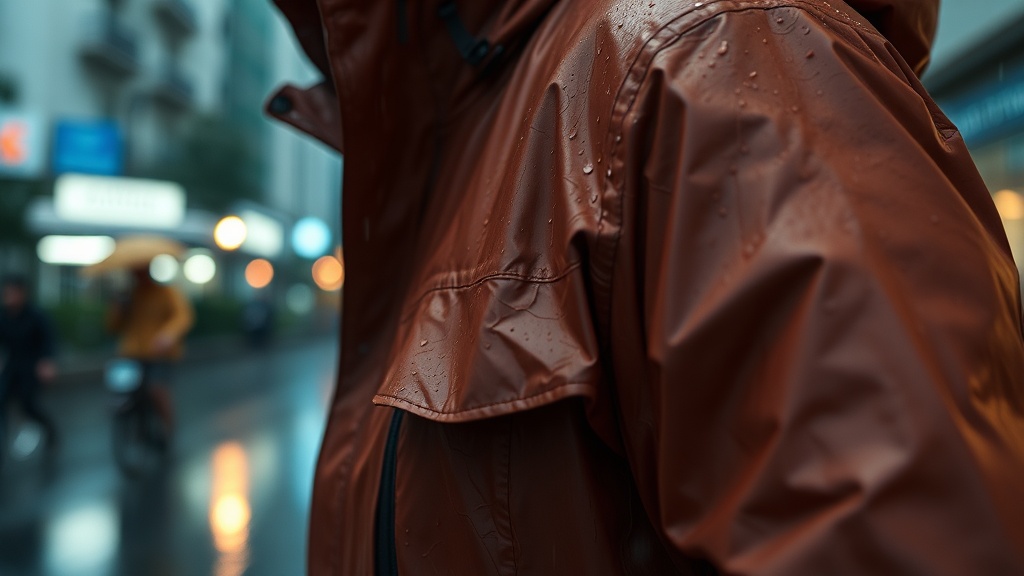
Add pack friction. In wet conditions, your pack rides against your jacket for 8–10 hours. The shoulder strap zones and mid-back take constant abrasion. This is where delamination bubbles appear first on pack-heavy expeditions — not at the seams, where people expect it.
What surprised me was how quickly contamination from stream crossings compounds the issue. Silt and fine organic particles embed in the face fabric weave, acting like microscopic abrasives against the DWR surface and wicking moisture toward the membrane. Gore’s own technical documentation on membrane technology acknowledges that contamination is one of the primary accelerants of performance loss.
Diagnosing Which Failure Mode You’re Dealing With
Confusing delamination with DWR failure leads to the wrong fix — one is repairable in the field, one is not, and treating them identically wastes time and can accelerate damage.
Here’s the field test:
Pour water on the outer surface of your jacket. If it sheets instead of beading, you have DWR failure. If you see bubbling or the fabric has a papery, separated texture when you pinch it lightly, you have delamination. These can co-exist, and frequently do in week-two monsoon conditions.
DWR failure: fixable. Wash the jacket with a technical cleaner like Nikwax Tech Wash, then reapply DWR with a wash-in or spray-on treatment and activate it with heat (tumble dryer on low, or carefully iron through a damp cloth at home). In the field without these tools, reducing contamination and keeping the jacket as clean as possible slows further degradation.
Delamination: not fixable in the field. The laminate bond is gone. You can apply seam sealer to visible bubbles as a short-term stop-gap, but it won’t restore the membrane architecture. The jacket needs professional repair or replacement. Your contingency plan needs to kick in — which means knowing what’s in your pack before you’re in that situation.
Prevention Protocol Before a Monsoon Expedition
The difference between a jacket that lasts two weeks in the monsoon and one that fails on day four is almost entirely pre-trip preparation — not jacket price, not brand, not Gore-Tex Pro vs. standard.
Unpopular opinion: Most high-end Gore-Tex Pro jackets fail in monsoons for the same reasons that mid-range ones do — because the users haven’t refreshed the DWR and have contaminated the face fabric with sunscreen or repellent. Spending $800 on a jacket doesn’t buy you immunity from chemistry. A $320 jacket with a freshly reactivated DWR will outperform a $700 jacket that wets out.
Pre-trip protocol:
Wash with Nikwax Tech Wash or Grangers Performance Wash — not standard laundry detergent. Reapply DWR with a wash-in treatment, then tumble dry on low for 20 minutes or iron on low through a damp cloth. This reactivates the existing fluoropolymer chains and deposits fresh coating. Do this within two weeks of departure, not six months out.
Then handle your jacket with clean hands. Keep it away from sunscreen and DEET. If you need insect repellent, apply it to exposed skin only and let it fully absorb before contact with the jacket. Store it loosely in your pack — not compressed at the bottom under three days of food weight.
REI’s technical guide on washing Gore-Tex jackets walks through the wash-and-reactivate cycle in detail — it’s the standard I use before every expedition.
Field Management When Failure Has Already Started
Once DWR failure begins mid-trip, you shift to damage control — managing moisture accumulation, layering strategy, and body heat to prevent the wet-out cascade from becoming a hypothermia scenario.
The clients who struggle with this are the ones who keep wearing a wetting-out jacket as if it’s still waterproof. It’s not. You need to adjust your strategy.
First, reduce the thermal penalty of a wet jacket by layering a moisture-wicking mid-layer that pulls humidity away from your skin even if the jacket face fabric is saturated. The jacket is now functioning more as a wind layer than a waterproof layer. Accept this and dress accordingly.
Second, dry the jacket aggressively at every opportunity. Even 20 minutes in direct sun on a rest day can restore partial DWR performance. Heat reactivates remaining fluoropolymer. It’s not a permanent fix, but it buys hours.
Third, if you’re seeing delamination bubbles expanding — the jacket is structurally compromised. Don’t try to stretch it further. Swap to your emergency rain layer (you should have one), and protect the delaminating jacket from further stress. This is why I carry a lightweight poncho or emergency bivy on every monsoon expedition regardless of how good my primary layer is.
Summary Comparison: DWR Failure vs. Delamination
| Factor | DWR Failure | Delamination |
|---|---|---|
| How it looks | Water sheets, fabric darkens | Bubbling, papery texture |
| Primary cause | Abrasion, contamination, age | Chemical exposure, heat, compression |
| Field fix? | Partial — heat reactivation | No — structural damage |
| Home fix? | Yes — wash + reapply DWR | Sometimes — professional repair |
| Monsoon timeline | Days 3–7 | Days 7–14 (accelerated by DWR failure) |
| Prevention | Pre-trip wash + DWR refresh | Chemical avoidance, loose storage |
| Safety risk | Moderate — reduced breathability | High — complete waterproofing loss |
Your Next Steps
The turning point is usually when people get serious about pre-trip maintenance instead of assuming expensive gear maintains itself. Here’s what to do:
- Two weeks before departure: Wash your Gore-Tex jacket with Nikwax Tech Wash, apply a wash-in DWR treatment, and tumble dry on low for 20 minutes. Test by pouring water on the surface — it should bead aggressively. If it doesn’t, repeat the DWR application.
- Pack a contingency layer: A 180-gram ultralight emergency poncho or silnylon rain layer costs almost nothing and takes up zero meaningful space. If your Gore-Tex fails on day 8 of a 12-day trek, you need a fallback that doesn’t require you to gamble on a compromised jacket.
- Establish a mid-trip maintenance habit: Every time you have 20+ minutes of sun exposure at camp, drape your jacket over a rock in direct light. Heat partially reactivates remaining DWR. It’s not a substitute for proper treatment, but on a 14-day monsoon trek, it can extend usable performance by two to three days.
Frequently Asked Questions
Can I fix Gore-Tex delamination at home?
Minor delamination around seams or edges can sometimes be addressed with seam sealer or Gore-Tex repair patches, but widespread laminate separation requires professional repair or replacement. Gore’s warranty program covers delamination in some cases — contact them directly with photos before spending money on DIY fixes.
How often should I reapply DWR before a monsoon trip?
Reapply DWR within two weeks of any trip involving sustained wet conditions. If the jacket has been stored for more than six months since last use, wash and reapply regardless of last treatment date. Storage without use still degrades the coating through oxidation over time.
Does Gore-Tex Pro hold up better in monsoons than standard Gore-Tex?
Gore-Tex Pro uses a more abrasion-resistant face fabric and a more robust laminate construction, which delays delamination under heavy use. However, the DWR coating on Pro jackets degrades at the same rate as standard Gore-Tex — it’s the same chemistry. Pro buys you more structural durability, not DWR longevity.
References
- Gore-Tex Technology Overview — gore-tex.com/technology
- Nikwax Technical Wash Product Information — nikwax.com
- REI Expert Advice: How to Wash a Gore-Tex Jacket — rei.com/learn