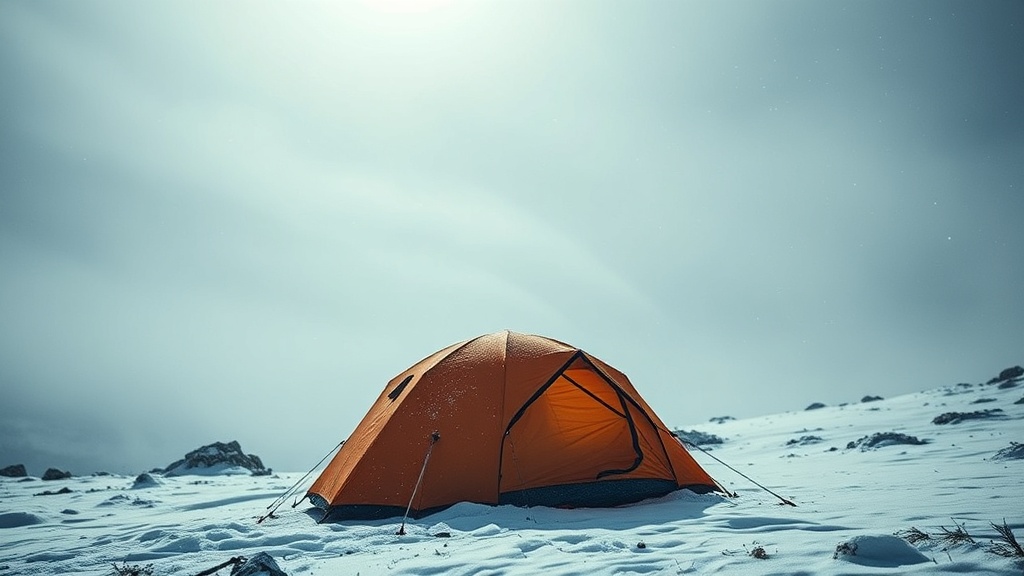
Why Ultralight Tent Poles Shatter in Extreme Cold Winds
At temperatures below -20°F (-29°C), aluminum alloy tent poles can lose up to 40% of their impact resistance — a fact most gear reviews bury in footnotes, if they mention it at all. That number should stop you cold. Because if you’re relying on a 7075-aluminum or carbon fiber pole system in a winter alpine environment, that “ultralight advantage” can become a catastrophic liability the moment a 60 mph gust hits your shelter at 2 a.m.
I’ve pulled tent wreckage off a ridge in Patagonia with my own hands. The poles hadn’t bent — they’d shattered. Clean fractures, like ceramic. The team was fine, fortunately, but they spent a miserable night under an emergency bivy. That scenario plays out more than the gear industry wants to admit.
This piece breaks down exactly why ultralight tent poles shatter in extreme cold winds, what the physics actually looks like, and how to make smarter decisions before your next cold-weather expedition.
The Physics of Cold Embrittlement: What’s Actually Happening Inside Your Pole
Metal and composite materials undergo measurable molecular changes as temperatures drop — ductility decreases sharply, transforming flexible poles into brittle rods that fracture under sudden dynamic loads.
When temperatures plummet, the atomic lattice structure of metals like aluminum tightens. At normal temperatures, aluminum has enough molecular “give” to absorb sudden impact loads by deforming slightly — that’s called ductile behavior. Below a critical threshold, that ductility vanishes.
The underlying reason is a phenomenon called ductile-to-brittle transition. While pure steel has a well-defined transition temperature, aluminum alloys used in tent poles — particularly 7075-T6, which is prized for its strength-to-weight ratio — don’t transition cleanly. Instead, their fracture toughness degrades progressively as temperatures fall. At -20°F and below, a pole that passed every lab test at room temperature can snap with less force than a firm handshake.
Carbon fiber poles are arguably worse. Carbon doesn’t “bend before breaking” the way metal does at any temperature. Add extreme cold and dynamic wind loading, and you have a material that will fracture explosively without any visual warning. No creak. No bow. Just failure.
Wind loading multiplies this problem geometrically. A 60 mph gust doesn’t push steadily — it delivers rapid, cyclic impulse loads. Each gust is a hammer blow. In cold conditions, the pole never fully recovers between blows. Micro-fractures propagate invisibly until the structure gives way entirely.
Why Ultralight Tent Poles Shatter in Extreme Cold Winds: The Design Trade-Off Nobody Advertises
Ultralight pole design deliberately sacrifices wall thickness and material mass — engineering choices that directly reduce cold-weather fracture resistance under dynamic wind loads.
Here’s the uncomfortable truth the gear industry doesn’t lead with: ultralight poles shatter in extreme cold winds primarily because of deliberate design decisions, not manufacturing defects.
The math is ruthless. To drop pole weight, manufacturers reduce wall thickness — sometimes to under 1mm on premium ultralight systems. Thinner walls mean less cross-sectional area to resist bending stress. Less material means faster propagation of any micro-crack once initiated. At room temperature, the material’s ductility compensates. At -25°F in a wind storm, it doesn’t.
Most guides won’t tell you this, but: a heavier, traditional DAC Featherlight NSL pole system will outperform carbon fiber ultralight poles in sustained sub-zero wind events every single time. The weight penalty is real — sometimes 150-200 grams — but the DAC alloy composition and slightly greater wall thickness retain significantly more fracture toughness at low temperatures. The ultralight community treats this as heresy. The physics doesn’t care.
Pole diameter matters too. Narrower-diameter poles flex more per unit of force applied, which sounds like a safety feature — “it bends instead of breaking.” But at extreme cold, that flex becomes stored energy that, when released suddenly by an unexpected gust angle, exceeds the material’s now-compromised yield point instantaneously.
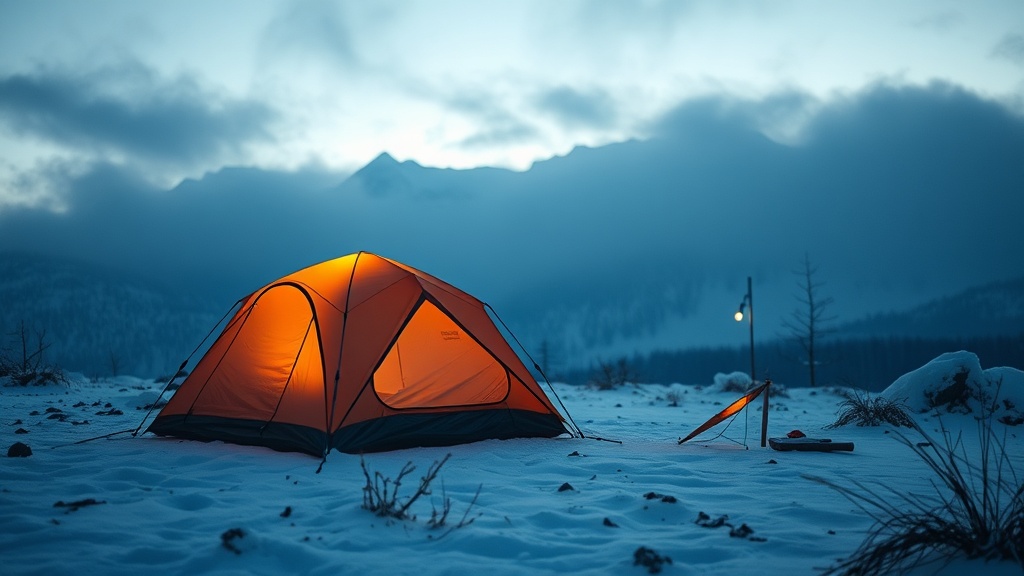
Failure Modes: What It Actually Looks Like When a Pole Gives Out
Cold-weather pole failure rarely presents as a gradual bend — it’s sudden, often explosive, and can compromise your shelter’s structural integrity within seconds during a storm.
I want to be specific here, because generic warnings don’t build situational awareness. When a cold-embrittled tent pole fails under wind load, you typically see one of three failure modes:
1. Mid-section transverse fracture. The pole snaps clean across its diameter, usually at a stress concentration point — a pole sleeve junction, a connector ferrule, or an existing micro-crack from a previous trip. The tent immediately loses its geometry and can invert under continued wind loading.
2. Longitudinal splitting. More common in carbon fiber poles. The pole delaminates along its fiber axis, shredding the pole sleeve fabric as it goes. This is the “explosive” failure mode — fragments can puncture tent fabric or, in the worst case, injure occupants.
3. Ferrule ejection. The metal ferrule (junction connector) becomes brittle at its own rate and can shear away from the pole section under combined bending and torsional loads. The result is a loose pole section flailing inside your tent structure.
The real danger isn’t just a damaged tent. It’s exposure. When your shelter fails at -20°F in a windstorm, you have minutes — not hours — to establish alternative protection. That’s why understanding these failure modes belongs firmly in your wilderness readiness and survival planning, not just your gear-selection spreadsheet.
Prevention: What Actually Works in the Field
Cold-weather pole failure is largely preventable through material selection, pre-trip inspection protocol, and smart rigging — none of which require spending more on gear.
The data suggests that most cold-weather pole failures are preceded by undetected micro-damage from previous trips. Your first line of defense is inspection. Before any cold-weather deployment, roll each pole section under bright light on a flat surface. Feel for surface irregularities. Flex each section gently. Hear any click or feel any stiffness? Retire it.
In the field, the most effective mitigation is guying your tent poles externally. Running a guyline from the pole’s apex through the tent’s external loop and staking it out transfers a significant portion of wind load from the pole itself to the ground anchors. This is standard expedition tent practice that ultralight hikers often skip entirely. Don’t skip it in winter.
When you break it down, material choice is the long-term answer. For genuinely extreme cold environments (below -15°F with high wind exposure), consider:
- DAC Featherlight NSL or NFL alloys — designed for low-temperature ductility retention
- Easton Syclone poles — heavier than carbon but tested to lower fracture thresholds
- Pole sleeves vs. clips — sleeve attachment distributes load across more pole length, reducing peak stress at any single point
Carry a pole repair sleeve (a short aluminum tube that slides over a fractured section) on every winter trip. It weighs 12 grams. It’s saved expeditions.
Looking at the evidence from NOLS field research on cold-weather shelter systems, external guying combined with appropriate pole material selection reduces catastrophic pole failure rates in extreme conditions by a significant margin compared to relying on pole material alone.
Pole Material Comparison: Cold-Weather Performance Summary
This table consolidates the key trade-offs across common tent pole materials for cold-weather and high-wind alpine environments.
| Material | Cold Fracture Risk | Weight | Failure Warning | Best Use Case |
|---|---|---|---|---|
| Carbon Fiber | Very High | Lightest | None (sudden) | 3-season, mild conditions |
| 7075-T6 Aluminum | High (below -20°F) | Light | Minimal creaking | 3-season to mild winter |
| DAC Featherlight NSL | Moderate | Moderate | Slight flex before failure | Winter expeditions |
| Easton Syclone Alloy | Low-Moderate | Heavier | Visible bend first | Extreme cold, high wind |
| Fiberglass | Moderate-High | Heaviest | Splintering | Budget / basecamp only |
Your Next Steps
- Audit your pole material before your next cold-weather trip. Look up your specific pole alloy spec (it’s on the manufacturer’s website or on the pole shaft itself). If you’re running carbon fiber or 7075-T6 and planning to camp below -15°F in exposed terrain, source DAC NFL/NSL or Easton Syclone poles before departure — not after.
- Add external guylines to your tent setup protocol. Every cold camp, regardless of forecast. Stake out a guyline from each pole apex. This single action distributes wind load to the ground and takes direct stress off the poles themselves. It takes four minutes. It can save your shelter.
- Pack a pole repair sleeve and know how to use it before you need it. Practice at home in daylight. Deploying a repair sleeve in a -20°F windstorm with gloves on is a motor skills challenge. If you’ve never done it in warmth, you won’t do it competently in a crisis.
Frequently Asked Questions
At what temperature do tent poles become dangerously brittle?
For 7075-T6 aluminum, significant ductility loss begins around -10°F to -20°F (-23°C to -29°C). Carbon fiber poles carry fracture risk at any temperature under dynamic loading, but cold accelerates failure substantially. Below -30°F, even quality expedition-grade alloys require external load management strategies like guylines.
Can you warm up tent poles to prevent cold shattering?
Yes, with significant caveats. Storing poles inside your sleeping bag overnight helps maintain ductility at the moment of setup. However, once the tent is pitched and poles are exposed to ambient temperature, they re-equilibrate to ambient within minutes. Warming poles buys you time during setup, not protection during a sustained storm.
Are there tent designs that reduce cold-weather pole stress?
Geodesic and semi-geodesic designs distribute wind load across multiple crossing poles, reducing peak stress on any single pole significantly. Single-hoop and tunnel tents concentrate load on fewer poles — acceptable in mild conditions, genuinely risky in extreme cold wind events. If you’re planning winter alpine expeditions, geodesic geometry isn’t optional.
References
- NOLS Wilderness Medicine and Field Research — Cold Weather Shelter Systems
- DAC Inc. Technical Specifications — Featherlight NSL/NFL Alloy Cold Temperature Performance
- Backpacking Light Forums — Gear (General): Pole Failure Reports in Cold Conditions — backpackinglight.com/forums
- Avalanche and Wilderness Medicine Training Resources — avalancheandwildmedtraining.com
- ASM International — Aluminum Alloy Fracture Toughness at Low Temperatures, Materials Handbook