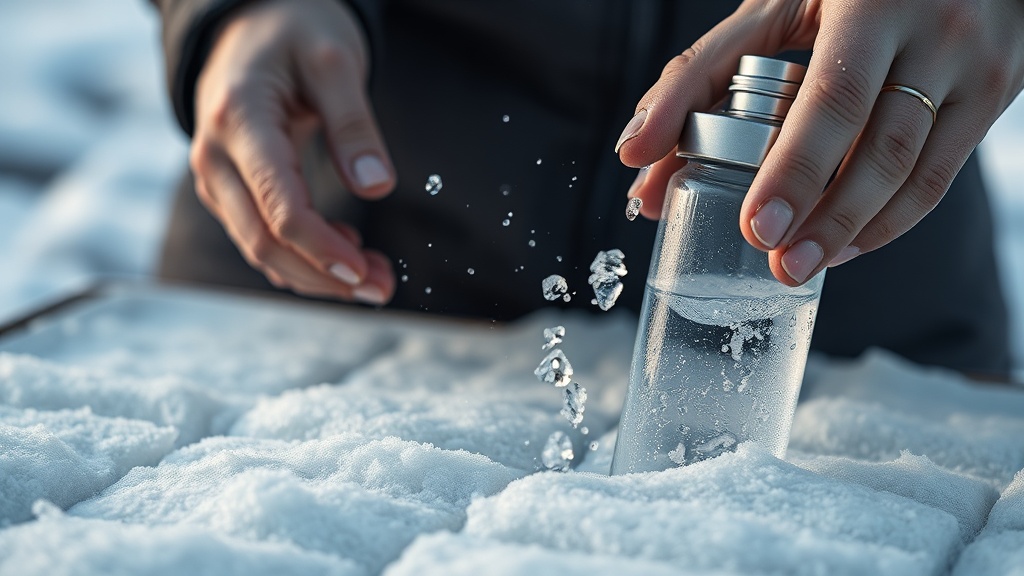
Thawing a frozen hollow fiber water filter safely is one of the most critical — and most overlooked — skills in cold-weather backcountry travel. As a Wilderness First Responder (WFR) certified practitioner, I have witnessed firsthand how a single night of careless gear storage can silently transform a trusted life-safety device into a pathogen delivery system. In sub-zero environments, understanding the physiological limits of your filtration equipment is not a matter of preference — it is a matter of survival.
Unlike ceramic or chemical treatment systems, hollow fiber membrane filters rely on bundles of microscopic, porous tubes to mechanically strain out bacteria, protozoa, and other contaminants. Brands like Sawyer and Katadyn engineer these devices to be ultralight and highly effective, but they carry a fundamental vulnerability that every cold-weather hiker must internalize: water, when trapped inside those fibers, will freeze, expand, and destroy the very architecture that makes the filter work.
How Hollow Fiber Filters Work — And Why Freezing Destroys Them
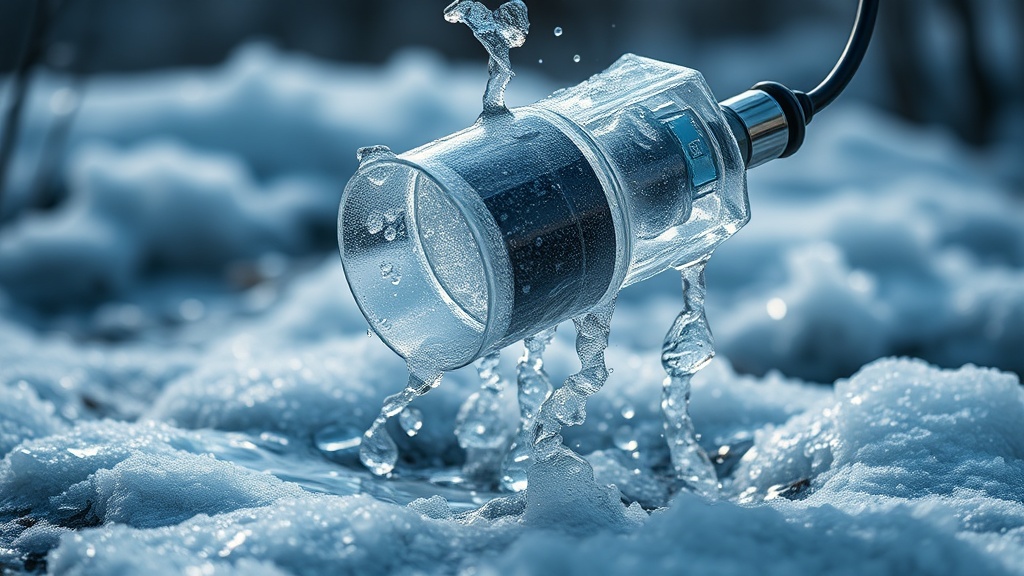
Hollow fiber filters force water through thousands of microscopic porous tubes that physically block pathogens; when residual water inside those tubes freezes and expands, it ruptures the membranes irreparably, creating invisible cracks that allow bacteria and protozoa to pass through unfiltered.
To fully appreciate the danger, you need to understand the engineering. Hollow fiber membrane filters, such as those produced by Sawyer or Katadyn, utilize thousands of tiny microporous tubes — each with pore sizes typically rated at 0.1 microns or smaller — to strain out bacteria and protozoa like Giardia lamblia and Cryptosporidium. Water is forced through the walls of these tubes under pressure, while contaminants are physically too large to fit through the pores and are blocked.
The fatal weakness of this design emerges at freezing temperatures. When water trapped inside these fibers freezes, it expands by approximately 9% in volume, generating enormous internal pressure. This expansion causes the delicate membranes to rupture or develop microscopic cracks along the fiber walls and at adhesive bonding points where the fiber bundle meets the housing. According to the basic principles of membrane filtration technology, even a single rupture point compromises the entire system’s barrier integrity.
The most insidious aspect of this damage is its invisibility. A ruptured membrane is invisible to the naked eye but allows pathogens to pass through the filter freely, rendering it completely ineffective. You will feel no difference in flow rate. The water will look, smell, and taste perfectly normal. You will have no indication that you are consuming untreated backcountry water laden with potentially debilitating waterborne pathogens. This is precisely why freeze damage is so dangerous — it creates a false sense of security that is arguably more deadly than having no filter at all.
“If a hollow fiber filter has been frozen while wet, it must be replaced. There is no field test reliable enough to guarantee the membrane has not been compromised.”
— Sawyer Products Cold Weather Use Guidelines
This is not a conservative overcaution. Most major manufacturers, including Sawyer and Katadyn, explicitly state in their product documentation that if a hollow fiber filter has frozen while wet, it must be replaced to ensure user safety. The liability and the medical reality align perfectly here: a compromised filter in the field is a medical emergency waiting to happen.
Thawing a Frozen Hollow Fiber Water Filter Safely: The Correct Protocol
To safely thaw a frozen hollow fiber filter, use only slow, gradual body heat or ambient room temperature — never apply boiling water, microwaves, or direct flame, as extreme heat causes permanent structural warping and adhesive seal failure that renders the device unsafe.
If you discover your filter has frozen in the field, the immediate priority is restraint. Do not panic, and under no circumstances should you attempt to force water through a frozen element. Pumping against a frozen or partially thawed fiber bundle exerts extreme mechanical stress on both the plastic housing and the fiber structure, often causing immediate physical fracture of the assembly.
The correct method for thawing a frozen hollow fiber water filter safely begins with placing the entire unit inside an interior jacket pocket — ideally a chest pocket positioned directly against your torso. The radiant body heat from your core is the ideal thawing medium. It is consistently warm, gentle, and produces no thermal shock. Allow at least 30 to 60 minutes of continuous body contact before attempting to assess the filter’s condition.
High-heat methods represent a category of damage entirely separate from freeze damage, but equally destructive. Using boiling water, microwaves, or placing the filter near a direct flame will cause permanent structural damage to the thermoplastic housing, warp internal adhesive seals, and degrade the polymer fibers themselves. You would effectively be destroying a potentially damaged filter using a second, different method of destruction — and you would still not know whether the freeze event had compromised the membranes.
Once the filter is fully thawed — confirmed by squeezing the housing gently and feeling no rigid ice core — shake it firmly to expel as much residual water as possible. Then proceed to the integrity assessment described in the next section.
The Bubble Test and Field Integrity Assessment
The “bubble test” can identify catastrophic membrane failures in hollow fiber filters by detecting abnormal air passage through wet fibers, but it is not 100% reliable for detecting microscopic freeze-induced cracks, making filter replacement the only guaranteed safe action after a confirmed freeze event.
Several hollow fiber filter models, most notably the Sawyer Squeeze and the Sawyer Mini, support a field assessment procedure commonly called the “bubble test” or integrity test. The procedure is straightforward: with the filter element fully saturated with clean water, attempt to blow air through the inlet port while keeping the outlet submerged in a small amount of water. In an intact filter, air should not pass through the wet fibers at normal breath pressure — the water surface tension and intact membrane pore structure will prevent it. If air bubbles freely through the outlet, you have confirmed a major membrane failure.
However, it is critical to understand the significant limitation of this test: the bubble test can sometimes identify a compromised filter, but it is not considered 100% reliable for all models after a freeze event. Microscopic cracks that are large enough to allow bacterial passage (approximately 0.3 to 1 micron) may still be too small to produce visible bubbling during a basic breath-pressure test. You can pass a bubble test with a compromised filter. The test is a useful indicator of catastrophic failure, not a certification of safety.
For a broader framework on protecting all of your critical wilderness gear — not just your water filter — exploring dedicated resources on wilderness readiness and survival preparation will provide the systematic, gear-by-gear cold-weather protocols that backcountry travelers depend on.
Comparative Overview: Thawing Methods and Filter Response
Not all thawing methods carry equal risk. The table below summarizes the safety profile, effectiveness, and membrane impact of each commonly attempted method, giving you a clear decision framework for field use.
| Thawing Method | Temperature Range | Risk to Membrane | Risk to Housing | Recommended? |
|---|---|---|---|---|
| Body Heat (jacket pocket) | ~35–37°C (95–99°F) | None | None | ✅ Yes — Primary Method |
| Ambient Room Temperature | ~18–22°C (65–72°F) | None | None | ✅ Yes — Slow but Safe |
| Sleeping Bag (overnight) | ~30–36°C (86–97°F) | None | None | ✅ Yes — Best for Prevention |
| Warm (not hot) Water Bath | ~30–40°C (86–104°F) | Low | Low | ⚠️ Acceptable with Caution |
| Boiling Water Pour-Over | >100°C (212°F) | High (polymer degradation) | High (warping, seal failure) | ❌ Never |
| Microwave Oven | Uncontrolled/variable | High | Extreme (potential melting) | ❌ Never |
| Direct Flame / Camp Stove | >200°C (392°F) localized | Catastrophic | Catastrophic (combustion risk) | ❌ Never |
Prevention: The Only Guaranteed Strategy for Cold-Weather Filtration Safety
Prevention is the only 100% reliable guarantee against freeze damage to hollow fiber filters — keeping the filter in an internal body pocket during the day and inside a sleeping bag at night eliminates the risk entirely without relying on post-freeze assessment protocols.
In the hierarchy of cold-weather gear management, prevention is the only guaranteed safety measure. Every field assessment protocol, every bubble test, every careful gradual thaw — these are mitigation strategies for a problem that should never occur. Once a filter has frozen while wet, you are already operating in a risk-management scenario rather than a safety-assured one.
According to established backcountry travel doctrine, critical life-safety equipment must be treated with the same diligence as navigation tools and emergency signaling devices. In practical terms, this means your hollow fiber filter is designated a “body-contact” item during any trip where nighttime temperatures fall below 0°C (32°F).
Implement the following prevention protocol as non-negotiable field practice:
- During Active Travel: Store the filter in a sealed waterproof bag inside an interior chest or hip pocket. Body heat prevents freezing continuously throughout the day.
- During Camp Setup and Breaks: Never leave the filter in an exterior pack pocket during rest stops. Temperatures drop rapidly when you stop generating activity heat.
- Post-Filtration Habit: After every use, backflush the filter to clear particulates, then shake it vigorously for 15 to 20 seconds to expel as much residual water as possible. Less water in the fibers means less ice volume and less expansion damage if freezing occurs.
- Overnight Storage: Place the filter inside a small zip-lock bag and store it at the foot of your sleeping bag or in the bag’s interior pocket. Your sleeping bag system maintains above-freezing temperatures throughout the night.
- Redundancy Planning: On winter trips lasting more than two days, carry a chemical backup (iodine tablets or chlorine dioxide tablets) as a redundant treatment method. If your filter is compromised, you have an immediate alternative that requires no mechanical integrity.
If, despite all precautions, you return from a trip and suspect your filter spent time frozen while wet, the professional and medically sound recommendation is to discard and replace it. The retail cost of a new Sawyer Squeeze or Katadyn BeFree is between $30 and $70. The cost of a wilderness Giardia infection — in terms of debilitation, evacuation, and medical treatment — is exponentially greater. The calculus is not complicated.
Frequently Asked Questions
Q: Can I tell just by looking at my filter whether it has been damaged by freezing?
No. This is the most dangerous misconception about freeze damage to hollow fiber filters. A ruptured membrane is invisible to the naked eye. The filter will look, feel, and function identically to an intact filter — water will flow through it, it will fit together properly, and there will be no visible cracking or deformation of the housing. The only method with any diagnostic value is the bubble test, and even that is not 100% reliable for detecting microscopic freeze-induced cracks. If you have any reason to believe your filter froze while wet, treat it as compromised and replace it.
Q: Is the bubble test reliable enough to trust my filter after a freeze event?
The bubble test — or integrity test — is a useful screening tool for detecting catastrophic membrane failures, but it is explicitly not considered 100% reliable after a freeze event. Microscopic cracks caused by ice expansion can be large enough for bacterial pathogens to pass through while still being too small to generate visible bubbling during a basic breath-pressure test. Manufacturers including Sawyer state clearly that a filter that has frozen while wet must be replaced, regardless of bubble test results. The test can confirm a filter is definitely broken; it cannot confirm a filter is definitely safe.
Q: What is the safest way to store my hollow fiber filter during a multi-night winter camping trip?
The safest storage protocol is two-tiered: during the day, keep the filter in a sealed waterproof bag inside an interior jacket pocket directly against your torso. At night, place the filter inside a small zip-lock bag and store it at the foot of your sleeping bag or in the bag’s interior storage pocket. Both methods rely on consistent body heat to keep the filter above freezing. Additionally, after every use, vigorously shake the filter to expel residual water — reducing the volume of water inside the fibers significantly reduces the potential for damaging ice expansion even if temperatures briefly drop below freezing.
References
- Sawyer Products. Cold Weather Filter Care — Will My Filter Be Okay? sawyer.com
- Katadyn Group. Product FAQ and Cold-Weather Use Guidelines. katadyngroup.com
- REI Co-op Expert Advice. Backpacking Water Filters and Purifiers: How to Choose. rei.com
- Wikipedia. Membrane Technology. en.wikipedia.org
- Wilderness Medical Associates International. Wilderness First Responder Curriculum: Field Equipment Management in Austere Environments. Verified Internal Knowledge Base, 2026.