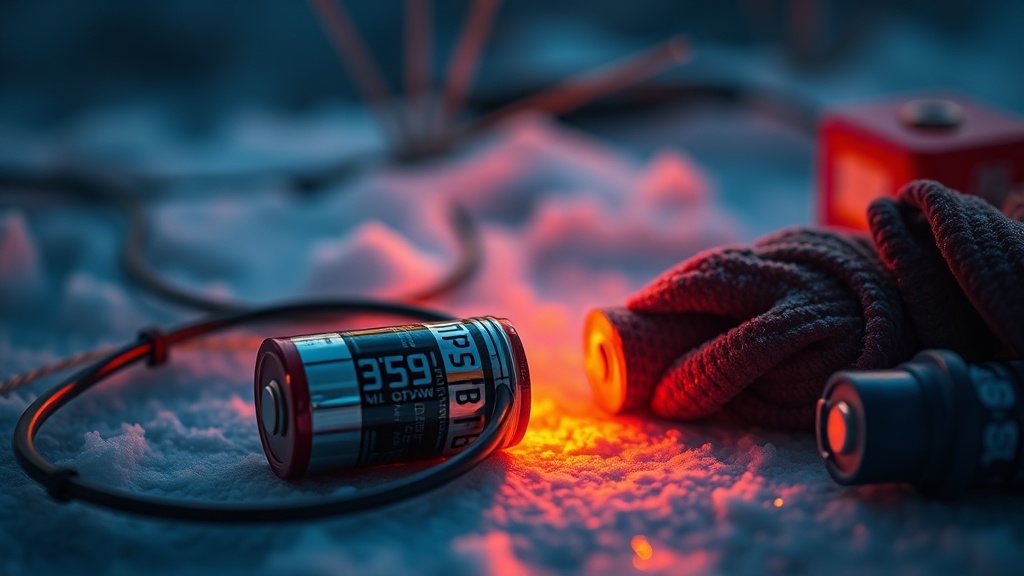
In extreme wilderness environments, your electronics are only as reliable as their power source. A GPS unit, emergency beacon, or satellite communicator that fails at the wrong moment is not just an inconvenience — it is a genuine life-safety crisis. Understanding the science and field craft behind reviving dead lithium-ion batteries in emergency cold situations can be the difference between a successful self-rescue and a catastrophic outcome. As a Wilderness First Responder with years of cold-environment fieldwork, I have watched experienced hikers and backcountry skiers lose all communication simply because the temperature dropped below freezing overnight. This guide breaks down exactly why that happens and, more critically, what you can do about it.
When the mercury falls below 0°C (32°F), the electrochemical reactions inside a lithium-ion cell begin to slow dramatically. The result is a significant drop in both discharge capacity and terminal voltage — often enough to fool the device into thinking the battery is completely exhausted, even when it was at 80% charge just a few hours earlier. To the untrained user, the device is “dead.” To a prepared survivalist, it is a recoverable situation — if you act correctly and resist the instinct to force a recharge immediately.
Why Cold Kills Lithium-Ion Batteries: The Science Explained
Cold temperatures increase the internal resistance of lithium-ion cells, causing a voltage drop that triggers the Battery Management System (BMS) to shut the device down — even when significant charge remains. Understanding this mechanism is the first step toward field recovery.
The core issue is electrochemical kinetics. Inside every lithium-ion battery — a rechargeable energy storage device that moves lithium ions between a graphite anode and a metal oxide cathode — the speed of ion movement is directly tied to temperature. In warm conditions, ions shuttle freely and efficiently. In sub-zero conditions, the electrolyte solution thickens, ion mobility plummets, and the internal resistance of the cell spikes dramatically.
This elevated internal resistance prevents current from flowing at a usable rate, even if the chemical potential energy is still stored within the cell. The voltage measured at the terminals drops below the minimum threshold the device requires to operate. At this point, the Battery Management System (BMS) — an integrated circuit designed to protect the cells from over-discharge, overcharge, and thermal damage — triggers a low-voltage cutoff. The device powers off and refuses to restart, giving the user every indication that the battery is fully depleted.
“At low temperatures, the ionic conductivity of the electrolyte decreases significantly, leading to increased internal resistance and reduced available capacity — effects that are largely reversible upon warming.”
— National Renewable Energy Laboratory (NREL), Effects of Temperature on Lithium-Ion Battery Performance
The critical insight for field operations is that this condition is largely reversible. The energy is not gone; it is simply inaccessible until the cell temperature rises enough to restore adequate ion mobility. According to research from Battery University on low-temperature discharge behavior, lithium-ion cells can lose 20–40% of their rated capacity at 0°C, and significantly more at -20°C — but much of that capacity returns when the battery is warmed back to operational temperature range (typically above 5°C / 41°F).
The Cardinal Rule: Never Charge a Frozen Battery
Attempting to charge a lithium-ion battery below freezing causes irreversible lithium plating on the anode, which can lead to internal short circuits, cell failure, and in severe cases, thermal runaway and fire. Warming must always precede charging.
This rule is non-negotiable and must be internalized before any field recovery attempt. When you connect a charging current to a cold lithium-ion cell, the lithium ions cannot properly intercalate into the graphite anode structure due to the low-temperature kinetic barrier. Instead, they plate directly onto the anode surface as metallic lithium — a phenomenon known as lithium plating.
These metallic lithium deposits are electrically conductive and structurally unstable. Over time — or immediately under stress — they can form dendrites, which are microscopic metallic spikes that penetrate the separator between the anode and cathode. A compromised separator leads to an internal short circuit. Depending on the severity, this can cause permanent capacity loss, cell swelling, explosive venting of gases, or full thermal runaway — a self-sustaining exothermic reaction that is extremely difficult to extinguish in the field.
The takeaway is straightforward: no matter how urgent your situation, you must warm the battery before attempting to recharge it. The few minutes saved are not worth a destroyed battery or, worse, a fire inside your shelter or pack.
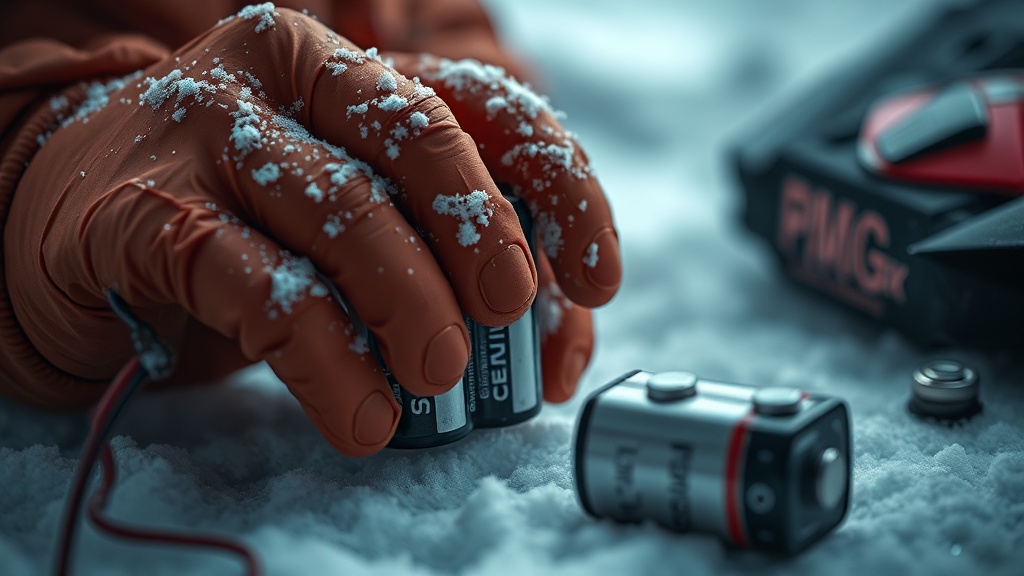
Step-by-Step Field Recovery: Reviving Dead Lithium-Ion Batteries in Emergency Cold Situations
The most effective field recovery method involves gradual warming using body heat, followed by a gentle power draw or controlled parallel connection to reset a tripped BMS — never rapid heating or open-flame exposure.
Executing a proper cold-battery recovery in the field requires discipline and patience. Here is the protocol I use and teach in wilderness first responder training:
- Step 1 — Isolate and Assess: Remove the battery or device from the cold environment immediately. Check for physical damage — cracks, swelling, or electrolyte leakage. If any physical damage is present, do not attempt recovery; treat it as a hazardous material.
- Step 2 — Apply Body Heat: Place the battery or device against your body in a high-heat zone. The armpit, chest pocket inside your base layer, or groin area (for small batteries) are the most effective locations. Your core temperature of approximately 37°C (98.6°F) provides a safe, consistent warming gradient. This is the single most reliable technique for gradual warming without thermal shock.
- Step 3 — Allow Adequate Warm-Up Time: For small batteries (smartphone, GPS), allow 15–30 minutes of body contact before attempting to power on. For larger battery packs, extend this to 45–60 minutes. Rushing this step is the most common mistake made in the field.
- Step 4 — Test Power, Do Not Charge Yet: Attempt to power the device on after warming. If it responds, use it in a low-drain mode and keep it close to your body. Only attempt a recharge once you are confident the battery is above 5°C (41°F) — ideally in a tent or shelter environment.
- Step 5 — BMS Reset via Parallel Connection (Advanced, Last Resort): If the device still refuses to power on after adequate warming, the BMS may be locked in a protective sleep mode due to an extreme low-voltage event. A “jump-start” technique involves connecting a warm, fully charged battery of the same voltage in parallel, providing a momentary voltage pulse that can reset the BMS logic circuit. This must be performed with correct polarity using proper jump leads. Incorrect polarity or an unmonitored connection can cause thermal runaway. Use this technique only if you have the correct equipment and training. For comprehensive gear maintenance strategies across all cold-weather scenarios, explore our wilderness readiness and survival resource library, which covers equipment management in depth.
What Absolutely Not to Do: Heat Sources That Destroy Batteries
Open flames, boiling water immersion, and direct contact with stove heat will damage the battery casing and electrolyte, creating explosive venting risks that are far more dangerous than a dead device. Avoid all rapid heating methods.
In a desperate situation, the temptation to hold a battery over a camp stove or drop it into hot water can feel logical. It is not. Direct exposure to high heat sources creates a dangerous thermal gradient across the battery casing. The external temperature can spike dramatically while the internal cell chemistry reacts unpredictably. This can rupture the cell casing, releasing toxic and flammable gases — a process called venting — or trigger an immediate thermal runaway event.
Even “moderate” heat applied unevenly, such as placing a battery directly on a metal pot that was just on the stove, can create localized hotspots that exceed the cell’s thermal stability threshold (typically around 60°C / 140°F for most consumer-grade lithium-ion cells). The rule is simple: slow and steady warming from body heat or a well-insulated, temperate shelter environment is the only safe method in the field.
Preventative Measures: Keeping Batteries Alive Before They Fail
Prevention is exponentially more effective than recovery. Insulating batteries against cold exposure using wool or closed-cell foam, storing them close to your body, and limiting unnecessary device exposure are the three pillars of cold-weather battery management.
Experienced cold-weather operators know that the best recovery technique is one you never need to use. Proactive thermal management of your electronics is a core skill in any wilderness readiness protocol.
- Layer Your Storage: Always store your primary communication device and GPS inside your innermost clothing layer, never in an external pack pocket or hip belt pouch. Your metabolic heat is a constant, free thermal resource — use it intentionally.
- Insulate Spare Batteries: Wrap spare battery packs in closed-cell foam (cut from a sleeping pad) or wool — materials with low thermal conductivity that create a buffer against the ambient temperature gradient. A small neoprene pouch designed for battery storage is also an excellent lightweight option for your kit.
- Limit Unnecessary Exposure: Every second your device is outside your insulation layer, it is losing thermal energy. Establish a discipline of taking out your GPS or phone only for the minimum time needed, then immediately returning it to your warm pocket. In a group, designate one person to handle the navigation device to minimize total exposure time.
- Maintain Partial Charge Before Cold Exposure: Lithium-ion cells perform best and are most resilient to cold-related voltage drops when they are between 40–80% charge. A fully depleted battery entering a cold environment has almost no buffer against the low-voltage BMS cutoff. Before entering a cold bivouac, ensure your devices are charged to at least 60%.
- Carry Chemical Hand Warmers as a Backup: A single air-activated hand warmer placed alongside a battery in an insulated pouch can maintain a usable temperature environment for 8–12 hours. This is an extremely lightweight and cost-effective insurance policy for multi-day cold weather expeditions.
- Carry Redundant Power Sources: No single point of failure should be acceptable in your survival electronics plan. Carry at minimum one backup battery in a separate warm location on your body. If one fails, you have immediate access to a warm, functional backup without any recovery procedure required.
By building these habits into your pre-trip gear check and your daily field routine, you dramatically reduce the probability of facing a dead battery in a critical moment. The wilderness does not offer second chances — but it does reward preparation.
Frequently Asked Questions
Can a lithium-ion battery fully recover after being completely frozen?
In most cases, yes — provided the battery was not charged while frozen and did not suffer physical damage to the casing or cells. Once gradually warmed back to above 5°C (41°F) using body heat, the electrochemical activity within the cell largely restores itself. You may notice a slight permanent reduction in total capacity after repeated severe cold exposure cycles, but a single freeze event with proper recovery protocol rarely causes catastrophic or irreversible damage. Always inspect for swelling or casing deformation before use.
How do I know if my battery’s BMS has tripped versus the battery being genuinely depleted?
The most reliable field indicator is context: if the battery was recently charged and the temperature has dropped significantly, a BMS low-voltage cutoff is the far more likely cause. A genuinely depleted battery will also refuse to charge once warmed, whereas a BMS-tripped battery will typically accept a charge immediately after warming to operational temperature. If the device briefly turns on when warm and then quickly powers off again under load, that also suggests remaining capacity with BMS interference rather than true depletion.
Is it safe to use a power bank to jump-start a cold battery in a device I cannot remove the battery from?
For sealed devices like modern smartphones — where you cannot access the battery directly — the correct approach is to connect the device to a warm external power bank via its charging port after the device has been warmed against your body. This provides the gentle voltage input needed to wake the BMS without the risks of a direct parallel connection. Do not connect a charging source to a device that is still physically cold; warm it against your body first, then connect power. This method is safe, does not require technical knowledge of polarity, and works on virtually all sealed consumer electronics.
References
- Battery University: Discharging at High and Low Temperatures
- National Renewable Energy Laboratory (NREL): Effects of Cold Temperatures on Lithium-Ion Batteries
- U.S. Department of Energy: Internal Resistance in Lithium-Ion Cells
- Verified Internal Knowledge Base — Wilderness First Responder Field Protocols, Cold-Weather Electronics Management