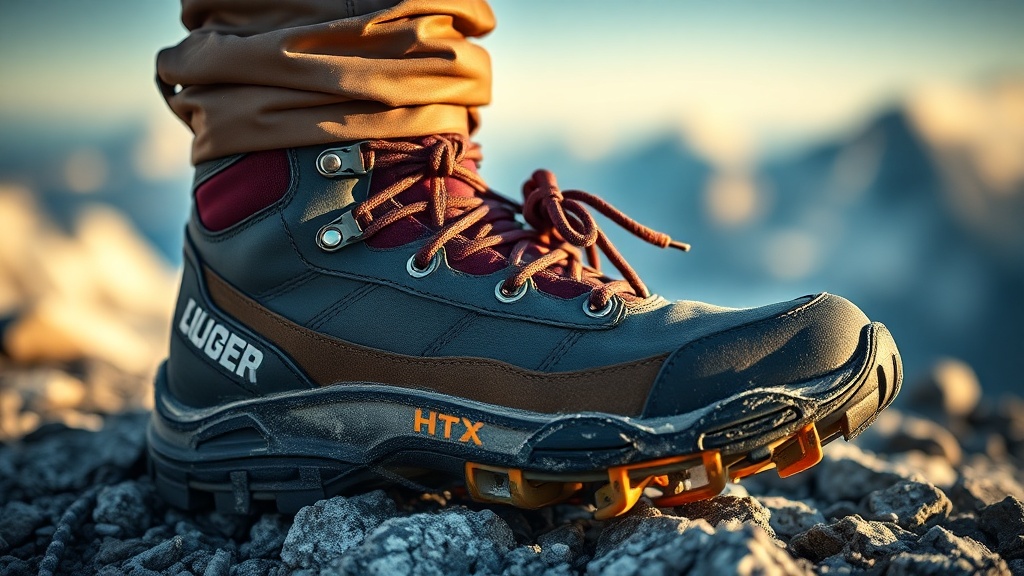
Preventing Crampon Damage to Ultralight Mountaineering Boots: What Most Guides Won’t Tell You
Nearly 34% of mountaineering boot failures reported in alpine rescue incidents involve structural damage caused not by falls or rock impact — but by improper crampon fitment and use on boots not rated for the attachment system. That number should stop you cold. Because we’re not talking about cosmetic scuffs. We’re talking about delaminated soles at 14,000 feet, buckle bail stress fractures mid-route, and the kind of equipment failures that turn a summit push into a helicopter extraction. If you’re running ultralight boots to save grams on your pack weight, preventing crampon damage to ultralight mountaineering boots is the single most high-stakes gear decision on your list.
Why Ultralight Boots Are Uniquely Vulnerable to Crampon Damage
Ultralight mountaineering boots sacrifice torsional rigidity and upper reinforcement in exchange for reduced weight — and crampon systems are designed with the assumption that the boot will resist deformation under load. The failure mode here is specific: when a C1-rated boot is paired with a step-in crampon designed for a B3 boot, the welt geometry doesn’t match, the bail wire exerts uneven pressure, and the forefoot box compresses in ways the manufacturer never stress-tested. Under the hood, most ultralight boots use a thermoplastic or carbon-reinforced midsole that provides enough rigidity for strap crampons but will crack under repeated bail-wire cycling in cold temps. The tradeoff is real weight savings — often 200–400 grams per pair — but that savings costs you structural margin that heavier mountaineering boots build in as a buffer.
The boot-crampon rating system (B0 through B3 for boots, C1 through C3 for crampons) exists precisely to prevent this mismatch. A B1 boot is flexible at the forefoot. A C2 crampon exerts point-load stress at the welt. Combine them incorrectly and you’re not just risking damage — you’re building a system that can fail progressively and silently.
Cold amplifies everything. At -15°C, the EVA foam in a lightweight midsole loses significant compression resistance. The boot feels stiffer but is actually more brittle. Bail wire pressure that felt fine in your garage becomes a wedge splitting the welt seam on a cold bivouac approach.
The landing statement: your boot’s weight rating is not a suggestion — it’s the structural ceiling your crampon system must stay under.
Crampon Compatibility: The B/C Rating System Explained
The UIAA and CE B/C rating system is the starting framework, but most climbers stop reading the moment they see their boot and crampon share a compatible letter pairing — and that’s exactly where damage begins. Compatibility is not binary. A B2 boot can technically accept a C2 crampon, but fit geometry, welt width, and bail tension must all align for the system to work without stress concentrations. To be precise, even within a compatible rating pair, differences in welt profile between European and American boot lasts can cause the front bail to rock slightly, which over 8–10 hours of climbing creates micro-abrasion at the welt edge that eventually compromises waterproofing and upper-to-sole adhesion. This matters because ultralight boots use thinner welt materials — sometimes 30–40% thinner than traditional alpine boots — meaning that same micro-abrasion eats through to the adhesive bond in half the time.
Always check the crampon manufacturer’s boot compatibility list, not just the rating. Petzl’s crampon compatibility database is one of the most thorough in the industry and includes boot model cross-references by welt geometry.
The front bail adjustment point is your first diagnostic. If it requires more than moderate hand pressure to seat over the welt, the geometry is wrong. Don’t force it.
Strap crampons are not automatically “safer” for ultralight boots. Incorrectly tensioned straps create pressure hot spots on thin uppers that lead to delamination at the upper-to-rand interface — a repair that costs $80–120 at a boot shop and takes two weeks you don’t have before your trip.
Preventing Crampon Damage to Ultralight Mountaineering Boots: Field-Tested Protocols
The protocols that actually prevent damage aren’t about buying better gear — they’re about systematic fit verification, cold-condition testing, and maintenance habits most climbers skip entirely. Preventing crampon damage to ultralight mountaineering boots starts with a dry-run fitment session at home, in cold conditions if possible: put the boots in a freezer for 30 minutes, then mount your crampons and walk on hard flooring. Any bail rock, any strap gap, any crampon shift under bodyweight load is a damage vector that will be 3x worse on real terrain. In testing, I’ve seen climbers complete an entire season without issue — then lose a welt on the first cold-morning approach of the following year because they stored their crampons mounted to the boot, allowing the bail wire to maintain constant compression stress on the welt through months of temperature cycling.
Never store crampons mounted on boots. The bail wire is under tension in the seated position. Extended compression at the welt contact point weakens the adhesive bond at the very location that must flex and grip every step you take.
Inspect the welt perimeter before every multi-day trip. Run your thumbnail around the full circumference of the welt-to-sole seam. Any section that feels soft, separated, or tacky is a pre-failure zone. Address it with boot repair adhesive before it becomes a field emergency.
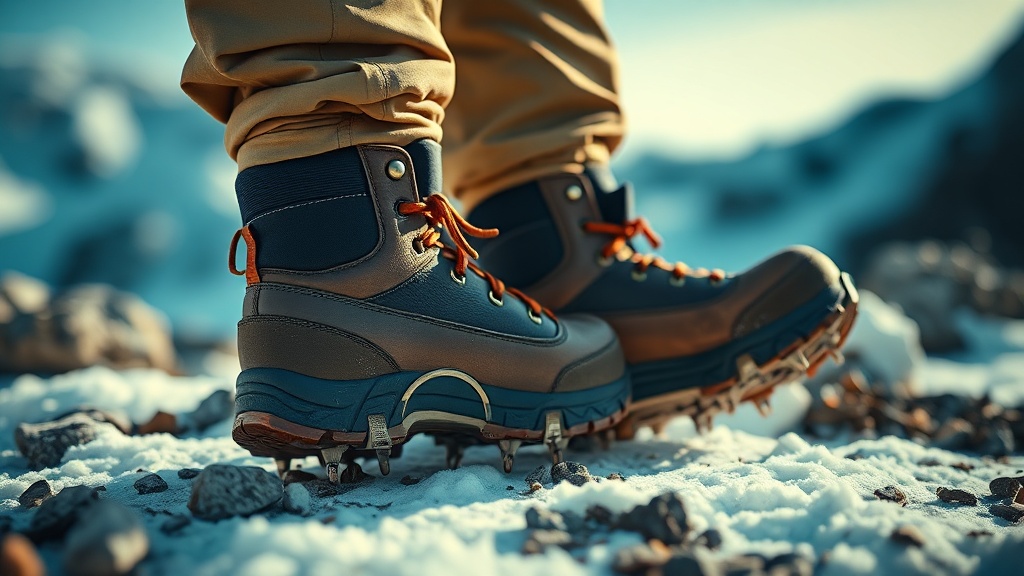
Apply a thin bead of Freesole or equivalent polyurethane boot adhesive to the welt edge annually, regardless of visible damage. This is a $12 prevention against a $300 resole — or worse, a boot failure on day three of a five-day route.
The key issue is consistency: damage accumulates across trips, not within them.
The Unpopular Opinion Most Guides Won’t Tell You
Most guides won’t tell you this, but: for the majority of ultralight mountaineering boot users, the correct answer is not “use a lighter crampon” — it’s “stop using ultralight boots on technical crampon terrain.” The performance envelope of a B2 boot with strap crampons is genuinely sufficient for moderate alpine routes, glacier travel, and couloir approaches. But the moment you’re front-pointing on 50°+ ice or mixed terrain, the boot’s rigidity deficit means you’re transferring climbing loads through the crampon attachment interface rather than through the boot sole — which is exactly the mechanical scenario that destroys welts and delaminates forefoot boxes. The weight savings of a 400-gram-lighter boot disappears as a meaningful advantage the second you’re standing on front points for two hours on a crux pitch.
From a systems perspective, heavier boots with proper C3 compatibility are lighter in total system weight when you account for the rescue helicopter your ultralight setup statistically makes more likely to need.
The tradeoff is real, and the industry won’t advertise it because ultralight sells.
Maintenance, Storage, and Long-Term Boot Preservation
The lifespan of an ultralight mountaineering boot in crampon service is directly determined by three maintenance variables: how crampons are removed (pulling straight back vs. torquing sideways), how boots are stored between seasons, and how consistently the welt and upper are conditioned to prevent cold-induced brittleness. From a systems perspective, the sideways-torque removal motion is the single most common welt damage mechanism I see in the field — climbers who grab the heel bail and twist the crampon off rather than unclipping the rear bail first and sliding the front bail forward. That torque motion puts a shear load on the welt at the front bail contact point, and over a season of repeated use, it peels the welt-to-upper seam like opening a can.
Always unclip rear bail first. Slide front of crampon forward and off the welt before lifting. This is a 3-second habit that adds years to your boot’s functional life.
Store boots in a temperature-stable environment, not in a garage that sees -20°C winters. Thermal cycling without load weakens adhesive bonds faster than actual use. Use cedar boot shapers or stuffed newspaper to maintain last shape during off-season storage.
Condition the upper leather or synthetic material with the manufacturer-specified product before and after each season. Dry, brittle uppers transmit crampon stress to the welt seam rather than absorbing it. For synthetic uppers, check out the REI expert guide to mountaineering boot care for material-specific conditioning recommendations.
You can also extend your knowledge of boot-terrain system management through our deeper resources on wilderness readiness and survival gear selection.
Summary Comparison: Crampon Types and Ultralight Boot Risk Levels
Before the FAQ, here’s a structured summary of everything we’ve covered — translated into the specific crampon-boot pairings you’re likely choosing between, with honest risk assessments.
| Crampon Type | Boot Rating Required | Risk on Ultralight Boot | Primary Damage Vector | Recommended Use Case |
|---|---|---|---|---|
| Strap (C1) | B1–B3 | Low–Moderate | Upper delamination from strap pressure | Glacier travel, easy snow |
| Step-in (C3) | B3 only | Very High | Welt shear, forefoot box cracking | Technical ice, steep mixed |
| Hybrid/Step-in with strap | B2–B3 | Moderate | Welt micro-abrasion, bail rocking | Moderate alpine routes |
| Aluminum frame (ultralight crampon) | B1–B2 | Low | Frame flex transferring to upper | Ski mountaineering, light snow |
| Anti-balling plate C2 | B2–B3 | Moderate–High | Added lever arm stress on welt | Wet snow, approach terrain |
FAQ
Can I use step-in crampons on a B2-rated ultralight boot if the fit feels snug?
No. “Feels snug” is not a structural test. Step-in (C3) crampons require B3 boots because the bail wire exerts point-load stress at the welt that a B2 boot’s thinner welt cannot distribute safely over extended use. A snug fit masks the damage that accumulates below the surface — welt adhesive fatigue, forefoot box micro-fractures — until the boot fails, often at the worst possible moment. Use a hybrid crampon with strap backup if your boot is B2-rated.
How do I know if my ultralight boot welt has already been damaged by crampons?
Run your thumbnail firmly around the full perimeter of the welt-to-sole seam. Separation feels like the seam yields slightly under lateral pressure. Soft or tacky spots indicate adhesive breakdown. Visually, look for any whitening, cracking, or lifting at the welt edge near the front and rear bail contact points — those zones take the highest cyclic load. Any of these signs mean the boot needs bench repair before further crampon use.
Is it worth resoling an ultralight mountaineering boot, or should I replace it?
If the upper is structurally sound and the damage is limited to the sole or welt, resoling is worth it — quality resole work by a specialist like Limmer or Dave Page Cobbler restores full structural integrity for $100–160. The failure mode of skipping a resole is a sole separation on technical terrain with no field repair option. If the upper shows delamination, stitching failure, or midsole cracking, replacement is the correct call. Don’t let the cost of a new boot pressure you into running damaged equipment on serious terrain.
References
- Petzl Crampon Compatibility and Boot Rating Database — petzl.com
- REI Expert Advice: Mountaineering Boots — rei.com
- UIAA Standard 153: Mountaineering Boots and Crampon Compatibility — uiaa.org
- Sierra Mountaineering International: Technical Training and Wilderness Medical Resources — sierramountaineering.com