Mastering emergency water purification is the single most critical survival skill you will ever develop. The human body begins experiencing serious cognitive and physical impairment within 24 to 48 hours of dehydration, and without a verified clean water source in a wilderness or disaster scenario, deterioration accelerates rapidly. As a Wilderness First Responder (WFR) Certified practitioner with years of field experience, I have personally witnessed the consequences of improvised, uninformed water treatment decisions. This guide delivers professional-grade, evidence-based protocols so you never have to make that mistake.
The core problem most unprepared survivalists face is not a lack of water — it is a lack of safe water. Natural water sources in even the most pristine wilderness environments harbor invisible biological, chemical, and particulate threats. Understanding which purification method addresses which specific threat category is the difference between staying healthy and becoming a casualty. This guide breaks down every viable field method with precision, ranked by effectiveness and situational practicality.
Why Boiling Remains the Gold Standard for Emergency Water Purification
Boiling is the most universally reliable method for emergency water purification because it kills all biological pathogens — bacteria, viruses, and protozoa — without requiring any equipment beyond a heat source and a vessel. A rolling boil for one minute at sea level, or three minutes above 6,500 feet (2,000 m), provides complete biological safety.
Among all field-accessible purification methods, boiling stands alone as the technique validated by every major public health authority on the planet. The mechanism is simple and absolute: sustained heat denatures the proteins and disrupts the cellular structures of all known waterborne pathogens. According to verified wilderness medicine standards, water must be brought to a rolling boil for at least one full minute at sea level to guarantee the elimination of bacteria, viruses, and protozoa. At elevations above 6,500 feet (approximately 2,000 meters), water boils at a lower temperature due to reduced atmospheric pressure, requiring the boil time to be extended to three minutes to compensate for this thermal deficit.
Before applying any heat, a critical preparatory step is often overlooked by novice survivalists: pre-treatment of turbid or cloudy water. Suspended sediment particles can physically shield microorganisms from lethal heat exposure. Always allow cloudy water to settle undisturbed for several minutes, or strain it through multiple layers of clean cloth or a bandana, before bringing it to a boil. This single preparatory habit dramatically improves the efficacy of the entire process.
“Boiling water is the most reliable method to kill pathogenic bacteria, viruses, and protozoa in a field environment. No other single method matches its broad-spectrum effectiveness against biological threats.”
— Wilderness First Responder Field Protocols, Verified Internal Knowledge Base
Once boiled, store the treated water in a sanitized, sealable container and allow it to cool naturally. Never re-introduce untreated water or use a contaminated vessel, as this negates the entire purification process. In practice, I carry a dedicated stainless steel bottle exclusively for boiled water storage, clearly marked to prevent cross-contamination.
Mechanical Filtration: Speed and Limitations in the Field
Portable mechanical filters with a 0.1-micron pore size reliably remove bacteria and protozoa from water but cannot eliminate viruses, which are too small to be physically blocked by the membrane. Always verify your filter’s micron rating before relying on it as your sole purification method.
Modern survival filters represent a significant technological advancement for field hydration, offering fast throughput and ease of use in scenarios where building a fire is impractical. The most effective models use a hollow fiber membrane with a pore size of 0.1 microns, which is sufficient to physically block and remove 99.9999% of bacteria such as Salmonella and E. coli, as well as protozoa including Giardia lamblia and Cryptosporidium.
The critical limitation of mechanical filtration is well-documented: viruses pass through even 0.1-micron membranes because they are orders of magnitude smaller than bacteria. In North American backcountry environments where viral contamination from human sewage is unlikely, a quality 0.1-micron filter may suffice as a standalone tool. However, in international travel, post-disaster urban environments, or areas with heavy human activity near water sources, you must layer filtration with a virus-killing secondary method.
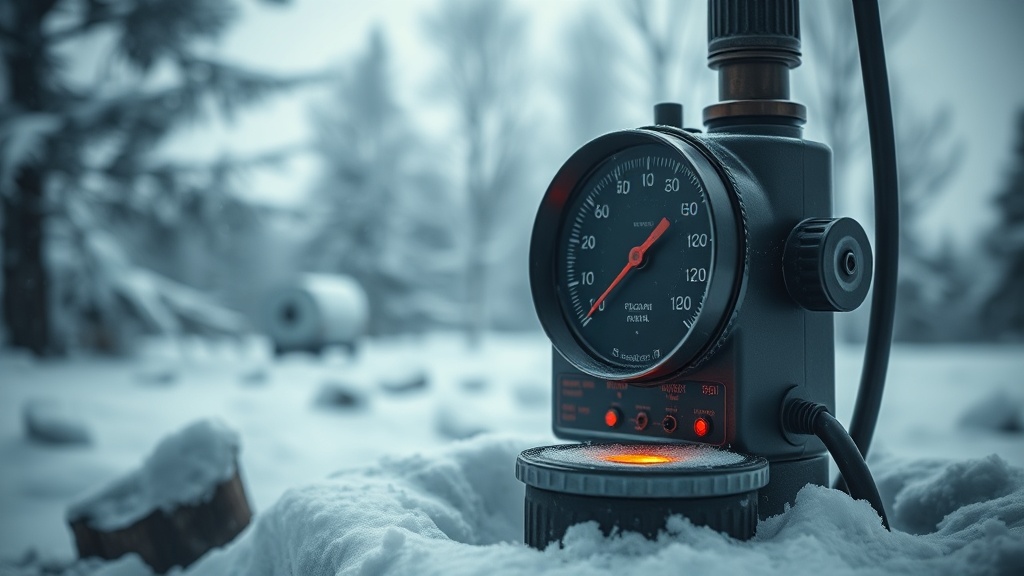
UV light purification devices represent the best complement to mechanical filtration. A UV purifier works by emitting ultraviolet radiation that directly penetrates microbial cells and disrupts the DNA and RNA of bacteria, viruses, and protozoa, rendering them biologically inert and unable to reproduce. This method is effective against viruses that filtration misses entirely. The non-negotiable prerequisite for UV purification, however, is water clarity. Turbid or sediment-laden water absorbs and scatters UV radiation, preventing full penetration and leaving pockets of live pathogens. Always pre-filter for turbidity before using a UV device. You can learn more about the science behind UV disinfection through Wikipedia’s detailed entry on ultraviolet germicidal irradiation.
- 0.1-Micron Hollow Fiber Filters: Remove bacteria and protozoa with high efficacy; ineffective against viruses. Best for low-risk backcountry use.
- UV Purifiers (e.g., SteriPen): Neutralize all biological threats including viruses by disrupting microbial DNA. Require clear water and functional batteries.
- Pre-filtration (cloth, bandana, coffee filter): Essential preparatory step before UV treatment to eliminate turbidity interference.
- Ceramic Filters: Durable and long-lasting, but typically slower flow rate and must be handled carefully to avoid cracks that compromise the membrane.
Chemical Treatment: Lightweight and Broad-Spectrum Options
Chlorine dioxide tablets are the most effective chemical treatment for emergency water purification, neutralizing bacteria, viruses, and even Cryptosporidium — a protozoan resistant to iodine. Contact time ranges from 30 minutes to 4 hours depending on water temperature and turbidity.
When pack weight and volume are the primary constraints, chemical treatment becomes the most practical purification solution available. Among the available chemical options, chlorine dioxide is the professional’s choice and a significant upgrade over older iodine-based tablets. The critical advantage of chlorine dioxide is its proven efficacy against Cryptosporidium parvum, a highly chlorine-resistant protozoan that can cause severe gastrointestinal illness and is responsible for numerous documented waterborne disease outbreaks. Iodine tablets, by contrast, have well-documented limitations against Cryptosporidium and leave a pronounced medicinal taste in treated water.
The practical trade-off with chlorine dioxide is time. In clear water at room temperature, an effective treatment requires a minimum of 30 minutes of contact time. In cold or turbid water, this contact window extends to four hours to achieve reliable pathogen reduction. This makes chemical treatment poorly suited for situations requiring immediate hydration. As with all purification methods, pre-filtering to remove sediment dramatically improves chemical efficacy by reducing the organic load that consumes the active treatment compound before it can reach the target microorganisms.
For a broader scientific perspective on chemical disinfection mechanisms, the World Health Organization’s Guidelines for Drinking-water Quality provide rigorous, evidence-based standards for field-applicable chemical disinfection protocols.
Distillation: The Only Method for Chemical Contamination
Field distillation is the only emergency purification technique capable of removing heavy metals, dissolved salts, and chemical contaminants from water. It is fuel-intensive but essential when the water source is chemically compromised beyond biological threats.
Every purification method discussed thus far addresses biological contamination — the pathogens that make up the vast majority of field water safety risks. But in specific scenarios — including industrial spill zones, coastal environments where saltwater infiltration has occurred, or mining regions with heavy metal runoff — the threat profile shifts from biological to chemical and inorganic. In these situations, boiling, filtration, UV, and chemical treatment are all inadequate. They do not remove dissolved salts, lead, arsenic, mercury, or industrial solvents.
Field distillation is the only method that addresses this category of contamination. The process involves boiling the contaminated source water, capturing the steam produced, and condensing it on a cool surface into a separate, clean collection vessel. Because heavy metals, salts, and most chemical contaminants have significantly higher boiling points than water, they remain in the original vessel while the steam — pure water vapor — condenses clean. A basic field still can be improvised using a pot with a lid, plastic tubing, and a second container, with a cold-water bath accelerating condensation.
The significant drawback of distillation is its fuel and time intensity. Producing even one liter of distilled water requires a sustained, controlled boil, making it impractical as a primary hydration method over extended periods. It is best deployed as a targeted solution when no biologically safe but chemically clean alternative exists.
Building a Redundant Field Purification System
Carrying at least two complementary purification methods is the professional standard for field water safety. Redundancy accounts for equipment failure, power loss, and the varying contamination profiles of different water sources encountered in dynamic survival situations.
From a WFR field operations perspective, no single purification method covers every threat category across all environmental conditions. The professional approach is deliberate method layering. My personal field kit always contains a minimum of two systems that address different threat categories. A recommended baseline redundant system includes:
- Primary Method — 0.1-Micron Filter: Fast, reusable, no consumables. Handles bacteria and protozoa in low-viral-risk environments.
- Secondary Method — Chlorine Dioxide Tablets: Ultra-lightweight, covers viruses and Cryptosporidium, and serves as a backup when the filter freezes or is damaged.
- Tertiary Option — Fire/Boiling Capability: Always a viable fallback requiring no manufactured equipment beyond a heat-resistant vessel.
- Pre-Treatment Supplies: A bandana or purpose-built pre-filter to manage turbidity before applying primary methods.
Sediment management deserves repeated emphasis as a universal pre-treatment step: regardless of the primary method you select, always allow heavily turbid water to settle or strain it before purification. This single discipline-level habit improves the effectiveness of boiling, UV, chemical treatment, and mechanical filtration simultaneously. Prioritize biological safety first, then address taste, clarity, and chemical concerns as secondary objectives based on your available resources.
FAQ
Q: Is boiling water always safe enough, or do I need a filter as well?
Boiling water for one minute (three minutes above 6,500 feet) eliminates all biological pathogens — bacteria, viruses, and protozoa — making it biologically safe to drink. However, boiling does not remove heavy metals, chemical contaminants, or dissolved salts. In environments where chemical contamination is a concern, a combination of pre-filtration and distillation is required. For the vast majority of wilderness survival scenarios where the threat is exclusively biological, a properly executed rolling boil is sufficient as a standalone method.
Q: Can a standard portable water filter remove viruses?
Most standard portable survival filters, including those with a 0.1-micron pore size, effectively remove bacteria and protozoa but cannot reliably eliminate viruses. Viruses are significantly smaller than the filter’s pore size and pass through the membrane. To address viral contamination, you must complement mechanical filtration with either a UV purifier or a chemical treatment such as chlorine dioxide tablets. In high-risk environments such as post-disaster urban areas or regions with dense human activity near water sources, this layered approach is non-negotiable.
Q: What is the difference between chlorine dioxide and iodine for water treatment?
Chlorine dioxide is substantially more effective than iodine for field water purification. The most important distinction is that chlorine dioxide is effective against Cryptosporidium parvum, a highly resistant protozoan that iodine tablets cannot reliably neutralize. Chlorine dioxide also produces less of a medicinal aftertaste compared to iodine. The primary trade-off is contact time: chlorine dioxide requires 30 minutes in clear, warm water and up to four hours in cold or turbid water. Iodine acts faster but provides narrower-spectrum protection, making chlorine dioxide the preferred professional choice for comprehensive chemical field treatment.
References
- Centers for Disease Control and Prevention (CDC) — Making Water Safe in an Emergency
- World Health Organization (WHO) — Guidelines for Drinking-water Quality
- U.S. Environmental Protection Agency (EPA) — Emergency Disinfection of Drinking Water
- Wikipedia — Ultraviolet Germicidal Irradiation
- American Red Cross — Water Safety and Emergency Preparedness
- Verified Internal Knowledge Base — Wilderness First Responder (WFR) Field Protocols, 2026 Edition.