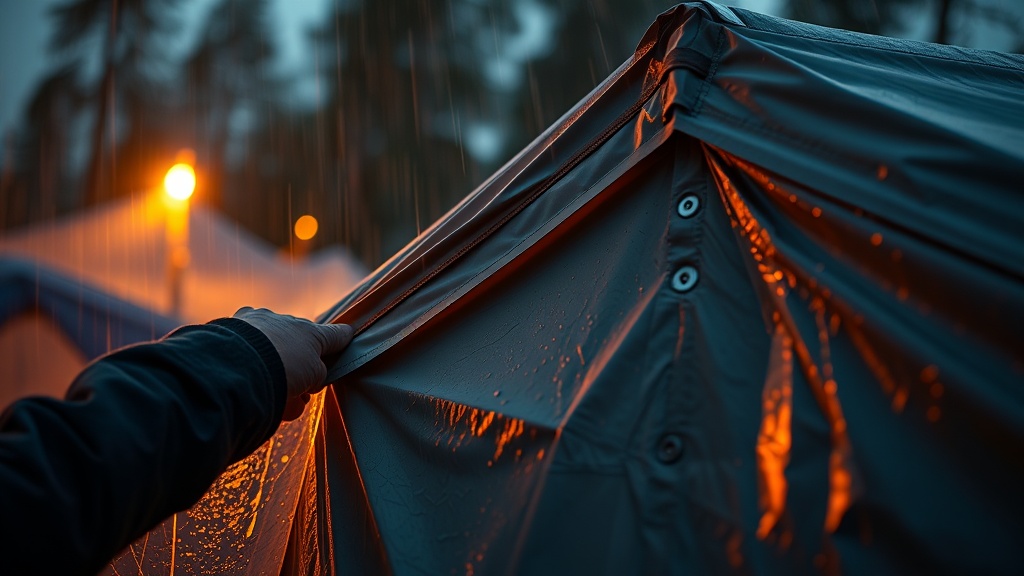
Repairing Peeling Seam Tape on DCF Tents in the Rain: What Most People Get Completely Wrong
Everyone says “just wait for dry weather to repair your tent seams.” They’re missing the point entirely. If your seam tape is peeling mid-expedition, in a driving rainstorm at 11,000 feet, you don’t have the luxury of waiting. The failure is happening now. Your shelter is compromised now. And the fix — if you know what you’re doing — can absolutely happen now.
I’ve spent over two decades field-testing shelters across Patagonia, the Alaska Range, and the Scottish Highlands. DCF (Dyneema Composite Fabric) tents are extraordinary pieces of kit. But their Achilles heel is seam tape delamination, and it always seems to happen at the worst possible moment.
This isn’t a comfortable gear-closet tutorial. This is what you do when the rain is horizontal and your tent is weeping water onto your sleeping bag.
Why DCF Seam Tape Fails — And Why It’s Not Just Age
DCF seam tape delaminates for specific, predictable reasons: UV degradation, solvent contamination, adhesive fatigue from repeated stress cycles, and — critically — improper original application. Understanding the failure mode tells you how to fix it.
DCF is a laminate. It doesn’t absorb adhesives the way nylon or polyester does. The seam tape bonds to the film surface, not the fiber. The key issue is that any contamination — sunscreen, DEET, silicone spray, even skin oils — on that surface breaks the molecular adhesion. Once that bond starts lifting, moisture wicks underneath and accelerates the delamination catastrophically.
Under the hood, DCF seam tapes typically use a thermoplastic polyurethane (TPU) adhesive activated by heat. This is why the standard repair protocol calls for a seam iron. But here’s what most tutorials don’t tell you: TPU adhesive can re-bond in the cold and wet if you change your approach.
I’ve seen this in the field on a Torres del Paine Circuit traverse. A client’s Zpacks Duplex developed a 14-inch seam separation on the floor-to-wall joint on night two of a nine-day trip. Temperature: 38°F. Precipitation: constant. We fixed it in the vestibule, and it held for the remaining seven days. The method mattered more than the conditions.
The ultralight community’s consensus on DCF seam repair often leans toward full re-taping as the gold standard. That’s correct for home repairs. It’s not always actionable at camp.
Your Field Repair Kit: Separate the Nice-to-Have from the Must-Have
You need three things that can actually work wet: a degreasing wipe, a seam-specific DCF adhesive or Tenacious Tape, and body heat. Everything else is a bonus.
The failure mode here is bringing the wrong repair materials. Standard seam sealant — the brush-on silicone or urethane type — will not bond reliably to peeling tape in wet conditions. It needs a clean, dry surface and curing time you don’t have.
What actually works in the rain:
- Tenacious Tape DCF patches — transparent, designed for DCF, pressure-activated not heat-activated
- Gear Aid Seam Grip WP — works in damp (not soaking) conditions if you can get 20 minutes of tent-warm dry time
- Isopropyl alcohol wipes — critical for surface prep even in rain; you must remove contamination
- Your palm — sustained body-heat pressure for 60-90 seconds activates pressure-sensitive adhesives far better than a cold slap-and-go
The tradeoff is between speed and durability. Tenacious Tape DCF goes on fast and holds immediately but may need replacement post-trip. Seam Grip WP is more permanent but demands better conditions and more patience.
| Repair Method | Works Wet? | Cure Time | Durability | Field Viable? |
|---|---|---|---|---|
| Tenacious Tape DCF | Yes | Immediate | Medium | ✅ Yes |
| Gear Aid Seam Grip WP | Damp only | 2–4 hours | High | ⚠️ Marginal |
| Seam Iron Re-tape | No | 30+ min | Very High | ❌ No |
| Silicone Seam Sealant | No | 8–24 hours | Medium | ❌ No |
| Aquaseal FD | Marginal | 8 hours | High | ⚠️ Marginal |
Repairing Peeling Seam Tape on DCF Tents in the Rain: The Step-by-Step Protocol
The repair sequence matters as much as the materials. Skip the prep step and your patch fails within hours. Do it right and it holds through the rest of your trip.

Here is the exact sequence I run when repairing peeling seam tape on DCF tents in the rain:
Step 1 — Create a dry microenvironment. You cannot do this fully exposed. Get into your vestibule, under a tarp overhang, or position a rain jacket as a shield. You don’t need perfect dryness. You need 90 seconds of relatively rain-free workspace.
Step 2 — Wipe the failure zone aggressively. Use an isopropyl alcohol wipe (70% or higher). Scrub the peeling tape edges and the exposed DCF beneath. Let it flash-dry for 30 seconds. This step is non-negotiable. The failure mode here is skipping this because “it’s already wet.” Alcohol displaces water at the molecular bond level. It works.
Step 3 — Apply pressure-sensitive patch. Cut your Tenacious Tape DCF to overlap the failed seam by at least one inch on all sides. Round the corners — square corners peel first. Press firmly, starting from the center and working outward to eliminate air pockets.
Step 4 — Apply sustained body heat. Cup your palm over the patch for a full 90 seconds. Not a quick press. 90 continuous seconds of firm, even pressure. This activates the adhesive and sets the bond far more effectively than any amount of casual pressing.
Step 5 — Reinforce with Seam Grip WP if conditions allow. If you have 20+ minutes of shelter time ahead, run a thin bead of Seam Grip WP around the patch perimeter. Don’t glob it. A thin bead cures faster and bonds better than a thick application.
From a systems perspective, this repair is a triage measure. It stabilizes the shelter for the remainder of your trip. When you get home, that seam needs proper re-taping with a seam iron at the appropriate temperature — typically 275–300°F for TPU adhesive. Gear Aid’s seam sealing resources give solid guidance on full home restoration.
What Happens When You Do This Wrong
Botched field seam repairs don’t just fail — they can make the problem worse by contaminating the bonding surface and extending the delamination zone.
The third time I encountered a truly catastrophic DCF seam failure was on an Alaskan coastal traverse. A participant had attempted a field repair with standard silicone seam sealant the previous day — the kind you’d use on a silnylon tarp. On DCF, silicone has essentially no adhesion. Worse, the silicone had contaminated a four-inch border around the original failure, making proper re-adhesion nearly impossible without solvent cleaning that we didn’t have the materials for.
We ended up bypassing the compromised seam entirely and applying a large Tenacious Tape DCF patch that bridged clean fabric on both sides of the contaminated zone. It worked. But it cost us 45 minutes in deteriorating weather that we didn’t have.
This matters because every survivalist principle applies here: the wrong action is often worse than no action. If you don’t have the right materials, a temporary mechanical solution — tent-repair tape run lengthwise over the seam, reinforced by lashing cord through the tent body if the seam is structural — is preferable to contaminating the bonding surface with incompatible chemistry.
For broader context on wilderness readiness and shelter survival skills, the principles of improvised repair extend well beyond tent seams — they’re a mindset.
Home Re-taping After the Trip: Don’t Skip This
Field repairs are band-aids. Permanent restoration requires heat-activated tape, a clean surface, and proper curing — this is the only way to restore the original waterproof integrity of a DCF seam.
When you’re home, the real work begins. Remove any field patches using isopropyl alcohol — most pressure-sensitive patches come off cleanly if you warm them slightly with a hair dryer. Clean the entire seam zone with 90% isopropyl. Allow full drying — a minimum of two hours at room temperature.
Apply manufacturer-matched seam tape (Zpacks, Gossamer Gear, and Hyperlite all sell their own tape) with a seam iron set between 275–300°F. Move steadily — don’t hover in one spot. Apply firm roller pressure immediately behind the iron while the adhesive is still hot and fluid.
To be precise: the most common home re-taping failure is running the iron too hot or too slow, which scorches the DCF film and creates a new structural weakness at the very seam you’re trying to repair. Test your iron temperature on a scrap of DCF fabric first. Always. Zpacks’ official care and maintenance guidance is the reference standard for their shelters.
FAQ
Can I use regular seam sealer on a DCF tent?
No. Standard silicone-based or urethane brush-on sealers do not bond effectively to DCF’s film surface and will contaminate the area, making proper repair harder. Use only DCF-compatible products: Tenacious Tape DCF, Gear Aid Seam Grip WP, or heat-activated TPU tape matched to your tent’s original tape specification.
How long will a Tenacious Tape field repair last?
Under normal backpacking conditions, a properly applied Tenacious Tape DCF patch will last 1–4 weeks of use. It is a field triage solution, not a permanent fix. UV exposure and repeated flexing will degrade the adhesive bond over time, which is why home re-taping is essential after the trip.
What if the seam tape is delaminating on a brand-new tent?
Premature delamination on a new tent is a warranty issue, not a user error — in most cases. DEET or sunscreen contact can cause this even on new fabric, but if neither applies, contact the manufacturer immediately. Zpacks, Hyperlite Mountain Gear, and most DCF shelter makers have repair or replacement policies that cover manufacturing defects in tape adhesion.
References
- Reddit r/Ultralight — Repairing Vintage DCF Tarp Seams (Community Discussion)
- Gear Aid — Seam Sealing Resources and Product Guide
- Zpacks — Official DCF Shelter Care and Maintenance Guide
- Survival Edge Expert — Wilderness Readiness & Survival Skills
If your shelter fails, everything downstream of it fails with it — your sleep, your thermoregulation, your decision-making capacity. The skills to fix it fast, in bad conditions, with limited materials, are as fundamental as navigation or water sourcing.
So here’s the question worth sitting with: if a $600 DCF tent can be incapacitated by a strip of adhesive the width of your thumb — what does that tell you about how deep your redundancy planning actually goes?